Jump to a section
- What “Invisible Braces” Actually Means
- Option 1: In-Office Clear Aligners (Invisalign)
- Option 2: Other In-Office Clear Aligner Brands
- Option 3: At-Home / Mail-Order Aligners
- Option 4: Ceramic (Tooth-Colored) Braces
- Option 5: Lingual Braces
- How to Choose the Right Option for You
- Ready to Compare Options for Your Smile?
- Frequently asked questions
If you’re an adult weighing your options for straighter teeth, the good news is that “braces” no longer means a mouth full of metal. “Invisible braces” is an umbrella term for several discreet orthodontic systems, and choosing between them depends on your bite complexity, lifestyle, budget and how much clinical oversight you want. Below, we compare five of the most common options adults ask about at our Huntington Beach practice, with plain-language explanations of what each one does well and where it falls short.
What “Invisible Braces” Actually Means
Invisible braces is a marketing phrase, not a single product. It generally refers to any orthodontic treatment designed to be less noticeable than traditional stainless-steel brackets and wires. That includes clear plastic aligner trays, tooth-colored ceramic brackets, and brackets bonded to the back of the teeth (called lingual braces). Some options are supervised in person by a dentist or orthodontist; others are ordered online and monitored remotely.
Why does the distinction matter for adults? Because adult teeth sit in denser bone, often alongside crowns, veneers, prior extractions or gum recession. Movement has to be planned around those realities, and the amount of hands-on supervision an option provides can meaningfully affect the outcome. If you’d like a deeper primer before comparing systems, our ultimate guide to Invisalign braces walks through how clear aligner therapy is planned from start to finish.
Option 1: In-Office Clear Aligners (Invisalign)
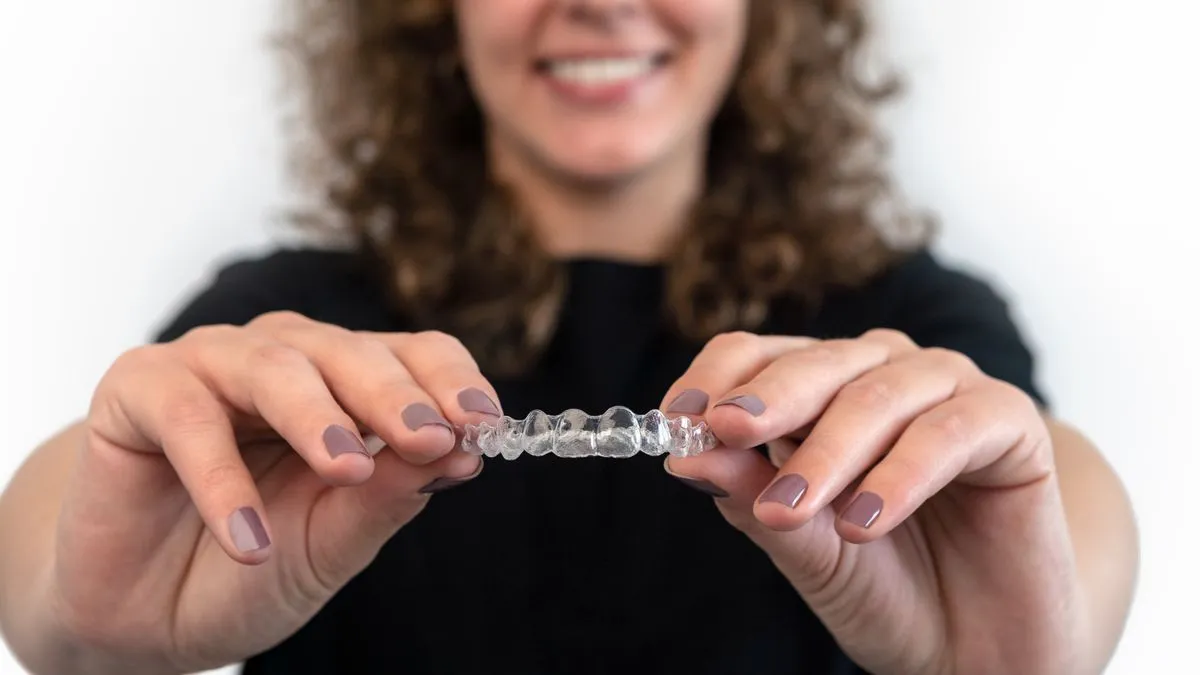
Invisalign is the most widely recognized clear aligner system. A dentist or orthodontist takes a 3D digital scan of your teeth, maps out each stage of movement, and issues a series of custom trays you wear roughly 20–22 hours per day, swapping to the next set every one to two weeks.
Strengths for adults:
- Trays are removable for eating, brushing and flossing
- Small tooth-colored “attachments” allow more complex movements than early aligner systems
- In-person checkups let the provider adjust the plan if teeth aren’t tracking
Tradeoffs:
- Requires disciplined wear time — results depend on the patient, not just the trays
- Very complex bites, severe rotations or skeletal issues may still need fixed braces or surgery
- Cost is typically higher than mail-order aligners
Invisalign is often a strong fit for adults with mild to moderate crowding, spacing or relapse after childhood orthodontics. You can read more about how we approach Invisalign at our Huntington Beach office and whether it might suit your case.
Option 2: Other In-Office Clear Aligner Brands
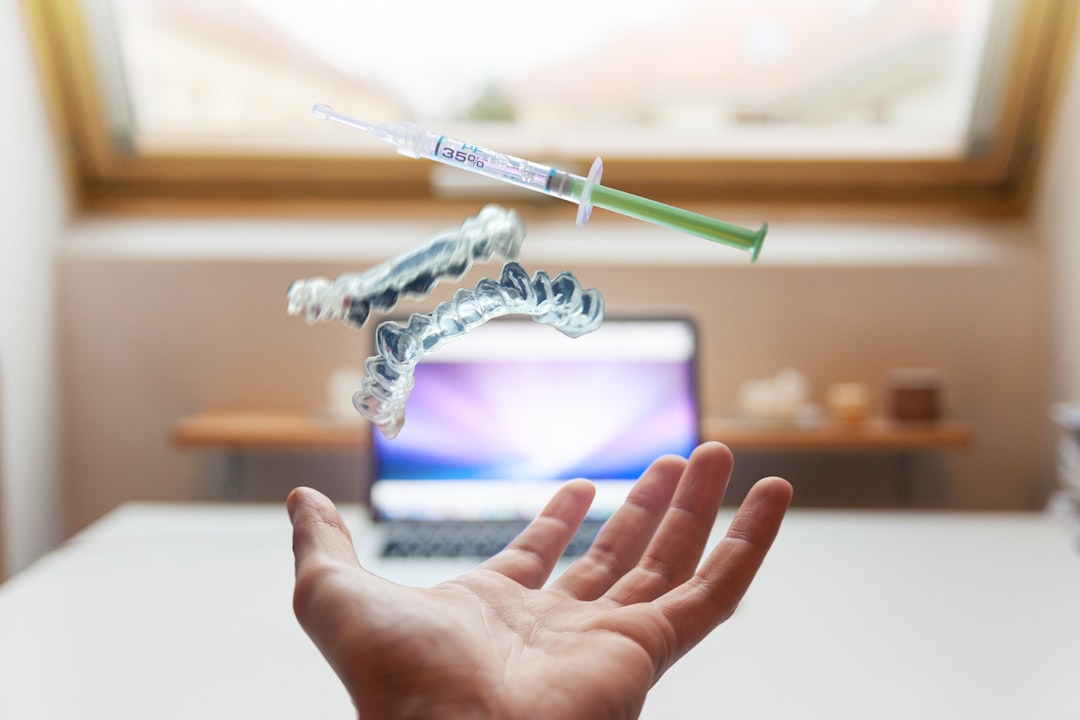
Several other clear aligner systems (such as ClearCorrect and Spark) work on the same general principle as Invisalign: digital scan, custom trays, staged movement, in-person supervision. Differences tend to be in tray material thickness, stain resistance, trim line around the gums and the software the provider uses to plan movements.
For most adult patients, the brand matters less than the clinician planning the treatment. Ask which systems your provider offers regularly, why they’d recommend one over another for your bite, and how they handle mid-course corrections if teeth aren’t moving as planned.
Option 3: At-Home / Mail-Order Aligners
Direct-to-consumer aligners have grown quickly because they’re marketed as cheaper and faster. You take impressions or scans yourself (or at a scanning storefront), receive trays in the mail, and check in remotely with a clinician you likely never meet in person.
Where they may be reasonable:
- Very mild cosmetic movement of front teeth in an adult with a healthy bite, no active gum disease and no recent restorations
Where the tradeoffs get serious:
- No hands-on exam means undetected cavities, gum disease or root issues can worsen during treatment
- Bite problems (how upper and lower teeth meet) are harder to plan and correct remotely
- If teeth don’t track the plan, there’s limited ability to intervene
- Refinements, retainers and follow-up care may cost extra
Adults considering this route should still have an in-person dental exam first. A short visit can flag issues that would make remote treatment risky.
Option 4: Ceramic (Tooth-Colored) Braces

Ceramic braces use the same bracket-and-wire mechanics as traditional metal braces, but the brackets are made of clear or tooth-colored ceramic so they blend in more. They’re a legitimate “invisible-ish” option many adults overlook.
Strengths:
- Can handle more complex tooth movements than aligners in some cases
- Nothing to remember to put back in — they’re fixed to your teeth
- Often a good choice when patient compliance with removable trays is a concern
Tradeoffs:
- More visible than aligners, especially up close
- Brackets can irritate cheeks and lips, particularly in the first weeks
- Brushing, flossing and food choices require more attention
- Ceramic brackets are more brittle than metal and can chip
If you’re weighing fixed braces against removable trays, our comparison of Invisalign vs. braces breaks down the day-to-day differences.
Option 5: Lingual Braces
Lingual braces are traditional-style brackets and wires bonded to the tongue-facing side of the teeth, making them essentially invisible from the front. They’re the most discreet fixed option available.
Strengths:
- Hidden from view in normal conversation and photos
- Can address complex movements like true braces
Tradeoffs:
- Typically the most expensive invisible option
- Adjustment period can affect speech and tongue comfort
- Requires a clinician with specific lingual training; not every office offers them
- Cleaning takes more effort
Lingual braces tend to suit adults in client-facing roles who need fixed appliances but want to keep treatment private.
How to Choose the Right Option for You

There is no single “best invisible braces for adults” answer — the right choice depends on your teeth, your bite, your habits and your goals. A useful decision framework:
- Start with a clinical exam. Straightening teeth on top of untreated decay or gum disease can create bigger problems. Address those first.
- Get a realistic complexity assessment. Ask specifically what your case involves: crowding, spacing, rotations, bite correction, prior restorations. Complexity drives which systems can actually deliver the result.
- Match the option to your discipline. Removable trays only work if you wear them. If that’s not realistic, ceramic or lingual braces may deliver better results.
- Understand total cost, not just monthly payments. Retainers, refinements and follow-ups matter. For a general sense of pricing structures, see our overview of what orthodontists charge for invisible braces.
- Ask about retention. Teeth naturally want to shift back. Every option requires long-term retainer wear to hold results.
Adults over 35 often have additional considerations — existing crowns, veneers, receding gums or bone loss — that influence the plan. Our post on Invisalign for adults over 35 covers those factors in more detail.
Ready to Compare Options for Your Smile?
The fastest way to know which invisible braces option fits your teeth is a consultation that includes an exam, digital records and a straightforward discussion of tradeoffs — not a sales pitch for one product. If you’re in Huntington Beach or the surrounding Orange County area, you’re welcome to contact our office to schedule a consultation with Dr. Baldwin and talk through what would actually work for your bite, budget and lifestyle.
Photos by Rainier Ridao, Daniel Frank, Lesly Juarez, Fakhri Labib on Unsplash.
Frequently asked questions
Are invisible braces as effective as traditional metal braces for adults?
For mild to moderate cases, modern clear aligners and ceramic braces can achieve results comparable to metal braces. For severe crowding, complex bite issues or skeletal problems, fixed braces (metal, ceramic or lingual) often remain more predictable. A clinical exam and 3D records are the only reliable way to know which category your case falls into.
How long does adult treatment with invisible braces usually take?
Treatment time varies widely based on complexity. Simple cosmetic alignment of the front teeth may take several months, while comprehensive bite correction can take a year or longer. Adult teeth generally move more slowly than teenage teeth because the surrounding bone is denser.
Are mail-order aligners safe if I have healthy teeth?
Even with healthy teeth, mail-order aligners skip the in-person exam that catches issues like early gum disease, hidden decay, root problems or bite conflicts. If you’re considering a direct-to-consumer option, get a full dental exam first and ask your dentist to review the proposed treatment plan.
Will I need to wear a retainer after invisible braces?
Yes. Teeth naturally drift throughout life, and every orthodontic system — visible or invisible — requires long-term retainer wear to hold results. Your provider should explain the retainer plan before you start treatment, not after.
Can I get invisible braces if I already have crowns or veneers?
Often yes, but it requires planning. Clear aligner attachments and bracket adhesives behave differently on porcelain than on natural enamel, and existing restorations may limit how certain teeth can be moved. This is something to discuss in detail during your consultation.
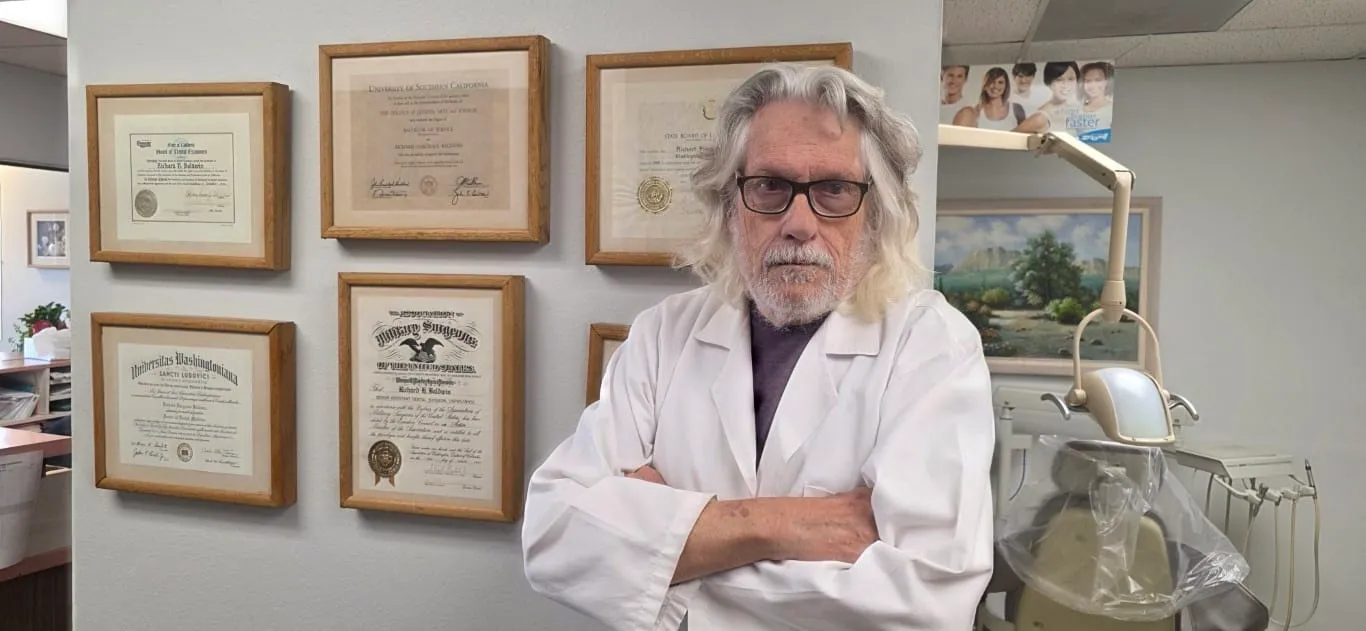
Written and clinically reviewed by Dr. Richard Baldwin, DMD General & cosmetic dentist in Huntington Beach since 1979 · Washington University School of Dental Medicine · Updated
Sources & further reading
- Braces and clear aligners — American Dental Association · MouthHealthy
- Orthodontic treatment for adults and teens — American Association of Orthodontists
- How Invisalign clear aligners work — Align Technology
This guide is general dental information from a practicing dentist, not a diagnosis. Treatment recommendations and costs are confirmed at an in-person exam.