Jump to a section
- What Invisalign Treatment Planning Actually Involves
- Scenarios 1–4: Mild Crowding and Rotation
- Scenarios 5–8: Gaps, Bite Issues, and Overjet
- Scenarios 9–12: Complex Adult and Combined Treatment
- What Changes the Treatment Timeline
- What Before-and-After Photos Don’t Show
- Ready to Start Your Own Transformation?
- Frequently Asked Questions
Before-and-after photos can help you understand the kinds of changes clear aligners may produce, but they cannot predict your result. This guide uses 12 educational scenarios to explain common treatment goals, planning tools and tradeoffs.
The examples below are illustrative composites, not HB Dentist patient records, testimonials or treatment predictions. Ages, measurements, tray counts, timelines and outcomes show how planning can differ; your plan requires an examination and diagnostic records.
Curious what your own case would look like? Call HB Dentist at (714) 536-2571 or book an Invisalign consultation.
What Invisalign Treatment Planning Actually Involves
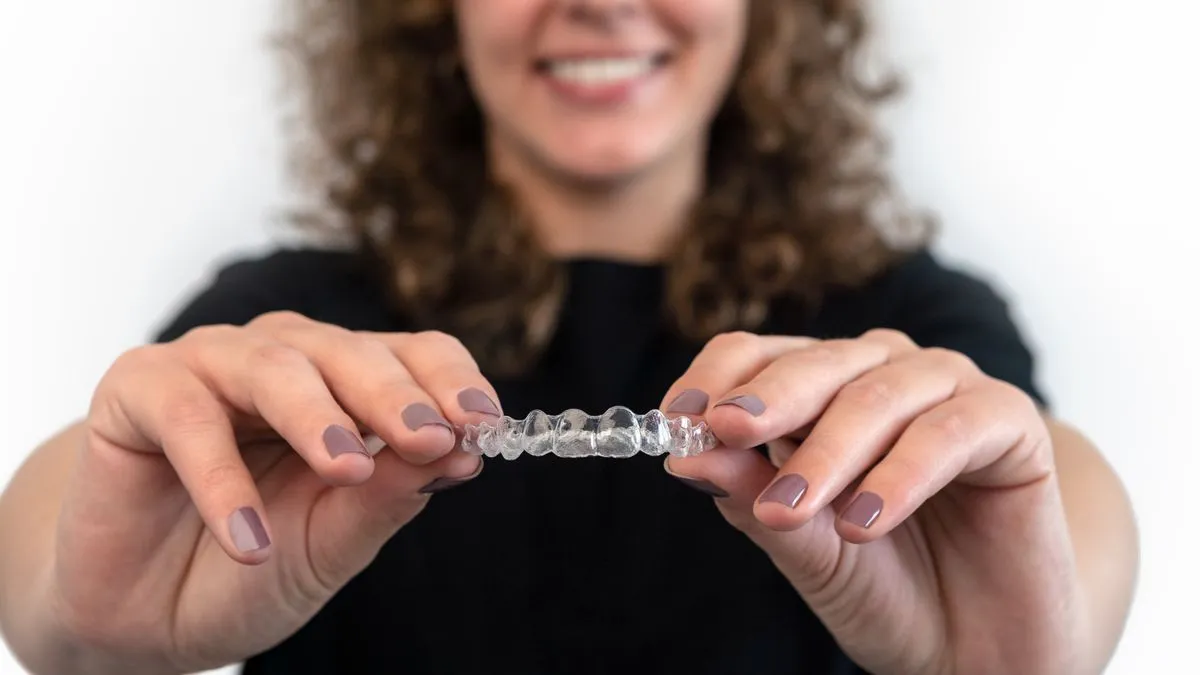
Clear-aligner treatment commonly involves an examination, diagnostic records or a digital scan, a planned sequence of aligners, progress checks and retention after active treatment. The exact tools and wear schedule depend on the case.
The scenarios below cover crowding and rotation, spacing and bite issues, and treatment that must be coordinated with restorative care.
Scenarios 1–4: Mild Crowding and Rotation
These examples show why apparently small alignment concerns can still require different attachments, tray counts or refinement plans.
Scenario 1 — Adult with lower front crowding
Concern: bottom teeth shifted after wisdom teeth removal in college. Illustrative plan: 22 upper trays, 30 lower trays, attachments on canines, weekly tray changes after week 6. Example timeline: 8 months. Potential outcome: improved alignment across the arch followed by prescribed retainer wear.
Scenario 2 — Adult with a single rotated canine
Concern: one visibly rotated upper canine — a relic of failed childhood orthodontics. Illustrative plan: 18 trays, an attachment on the canine and a refinement round. Example timeline: 6 months. Potential outcome: improved canine rotation followed by monitored retention.
Scenario 3 — Adult with a mild posterior crossbite
Concern: front crowding plus a mild crossbite on the right premolars. Illustrative plan: 32 upper and 32 lower trays, attachments and additional aligner features. Example timeline: 10 months. Potential outcome: improved crossbite and bite contact, subject to diagnosis and response.
Scenario 4 — Young adult with post-retainer relapse
Concern: two years without a retainer after childhood braces. Illustrative plan: 14 upper and 20 lower trays with attachments on the lateral incisors. Example timeline: 5 months. Potential outcome: improved alignment followed by a new long-term retention plan.
Scenarios 5–8: Gaps, Bite Issues, and Overjet
Bite corrections used to be the reason patients got sent to traditional braces. Attachments, bite ramps, and elastics have changed that.
Scenario 5 — Adult with a midline gap
Concern: noticeable diastema between the upper central incisors. Illustrative plan: 22 trays with attachments on the central incisors for controlled movement. Example timeline: 7 months. Potential outcome: gap reduction or closure; restorative contouring may be discussed when tooth shape affects symmetry.
Scenario 6 — Adult with a deep overbite
Concern: upper front teeth covered the lowers by roughly 90%. Illustrative plan: 36 upper and 40 lower trays with bite ramps on the upper incisors. Example timeline: 14 months. Potential outcome: a reduced overbite when the movement is suitable for aligner treatment.
Scenario 7 — Adult with increased overjet
Concern: upper teeth protruded significantly, causing discomfort when biting. Illustrative plan: 40 trays with elastics introduced partway through treatment. Example timeline: 13 months. Potential outcome: reduced overjet followed by a clinician-directed retention plan.
Scenario 8 — Adult with old extraction spaces
Concern: gaps left over from two premolars extracted decades ago. Illustrative plan: 38 trays with space-management features selected after diagnostic review. Example timeline: 12 months. Potential outcome: reduced spaces and improved midline alignment when closure is clinically appropriate.
Scenarios 9–12: Complex Adult and Combined Treatment
The final four are why we ask “what is the rest of your dental plan?” during the Invisalign consultation. Coordinating aligners with veneers, implants, or joint issues changes the case design.
Scenario 9 — Adult preparing for veneers
Concern: crooked front teeth ahead of a planned six-veneer case. Illustrative plan: 20 upper and 18 lower trays coordinated with later restorative planning. Example timeline: 8 months of aligner treatment before reassessing veneer needs. Potential outcome: improved tooth position may allow a more conservative restorative plan, but preparation needs vary.
Scenario 10 — Adult with a high-riding canine
Concern: upper canine had erupted well above the arch and never came down. Illustrative plan: 44 trays with an attachment, button and elastic setup. Example timeline: 16 months. Potential outcome: movement toward the arch when aligners are appropriate; some cases require specialist orthodontic treatment.
Scenario 11 — Adult preparing for a dental implant
Concern: adjacent teeth had tipped into the space of a molar lost years earlier. Illustrative plan: 28 trays intended to upright neighboring teeth and improve implant-site spacing. Example timeline: 10 months before restorative and surgical reassessment. Potential outcome: improved space for a future implant when coordinated with the restorative dentist and surgeon.
Scenario 12 — Adult with an uneven bite and jaw symptoms
Concern: uneven bite contributing to jaw pain and morning headaches. Illustrative plan: 34 trays coordinated with a separate evaluation of the bite and jaw symptoms. Example timeline: 12 months. Potential outcome: improved alignment or bite contact. Clear aligners are not a guaranteed treatment for jaw pain, which may have multiple causes.
What Changes the Treatment Timeline
The example timelines range from 5 months to 16 months, but they are not a practice average or a promise. Three factors commonly explain much of the variation:
- Case complexity. Deep bite, overjet, and impacted canine cases run 12–16 months. Simple relapse and rotation cases run 5–8 months.
- Wear compliance. Follow the wear schedule prescribed for your case. Inconsistent wear can extend treatment or reduce predictability.
- Refinement rounds. Some plans need additional refinement trays after the initial series to finish the details.
For a complete pricing breakdown across similar complexity ranges, see our Invisalign pricing guide for Huntington Beach, and if you are still deciding between clear aligners and metal, our Invisalign vs. traditional braces comparison covers the tradeoffs.
What Before-and-After Photos Don’t Show
Photos undersell the work. If you are seriously evaluating Invisalign before and after Huntington Beach results as a decision-making tool, here is what is not in the images:
- The retainer commitment. Teeth can shift after active treatment. Follow the retention schedule prescribed for your case.
- The first two weeks of speech adjustment. A slight lisp for the first week or two is normal. It resolves.
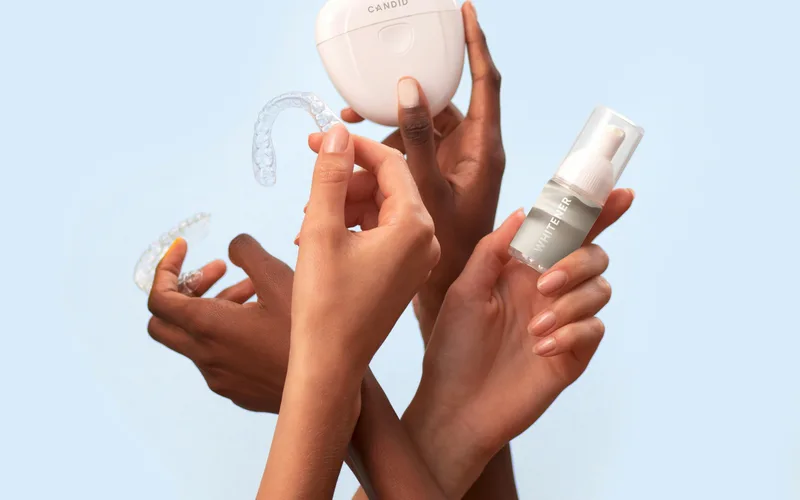
- Attachments. Small tooth-colored bumps bonded to teeth to give trays leverage. They come off cleanly at the end but are visible up close during treatment.
- IPR. Fractions of a millimeter of enamel reduced between teeth to create space. Painless and imperceptible after — but a real physical tradeoff worth understanding.
- Non-linear progress. Some weeks feel like nothing changes. Then a single tray swap shifts everything visibly. That is normal.
For adult treatment considerations, our Invisalign for adults over 35 guide covers gum health, existing dental work and retention. Our smile makeover guide explains how aligners may fit with whitening or restorative treatment.
Ready to Start Your Own Transformation?
An examination and digital treatment plan can answer the questions these examples cannot: whether aligners suit your case, the likely timeline, the alternatives and what the written estimate includes. A simulation is a planning aid, not a guarantee of the final result.
Learn more about Invisalign at HB Dentist or call (714) 536-2571 to request a consultation.
Frequently Asked Questions
How long does Invisalign treatment usually take? Treatment time depends on case complexity, oral health, aligner wear and refinements. Your examination and digital plan provide the useful estimate.
Do Invisalign before and after results hold up long-term? Results can remain stable when you follow the prescribed retainer schedule. Teeth can shift after treatment, so long-term retention matters.
Can Invisalign fix a deep bite or overjet in Huntington Beach? Clear aligners can treat some deep-bite and overjet cases using tools such as attachments, bite ramps or elastics. Suitability depends on the diagnosis.
Does every Invisalign patient need attachments or IPR? No. These are prescribed only when the planned tooth movements require them.
How much do these Invisalign transformations cost in Huntington Beach? Cost depends on complexity, treatment length, records, refinements and what the written quote includes. Request an itemized estimate after an examination.
Can I whiten my teeth during Invisalign treatment? Sometimes, but only with your dentist’s approval and product instructions. Do not place whitening gel in aligners unless your clinician confirms it is appropriate.
Ready to see your own before-and-after preview? Call HB Dentist at (714) 536-2571 or book your Invisalign consultation today.
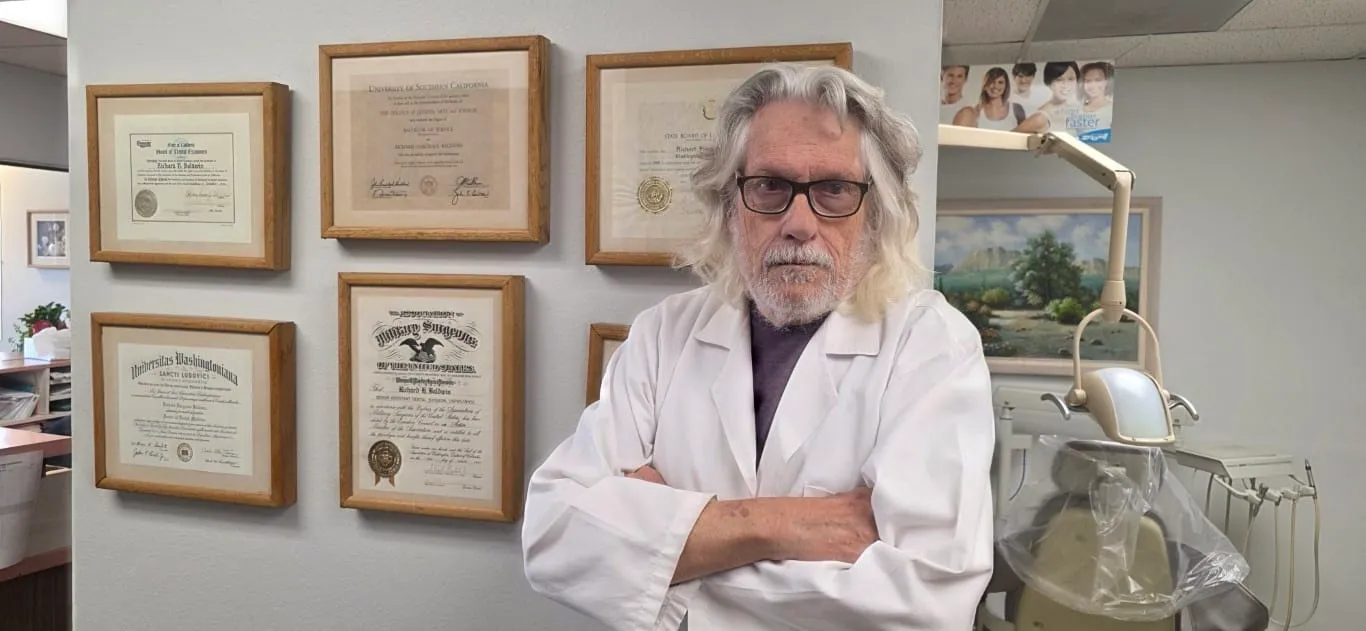
Written and clinically reviewed by Dr. Richard Baldwin, DMD General & cosmetic dentist in Huntington Beach since 1979 · Washington University School of Dental Medicine · Updated
Sources & further reading
- Braces and clear aligners — American Dental Association · MouthHealthy
- Orthodontic treatment for adults and teens — American Association of Orthodontists
- How Invisalign clear aligners work — Align Technology
This guide is general dental information from a practicing dentist, not a diagnosis. Treatment recommendations and costs are confirmed at an in-person exam.