Stops Bone Loss
Periodontitis destroys the bone holding your teeth in place, and that bone does not regenerate on its own. Treating the infection halts the process before teeth become loose.
Periodontal Care
Bleeding, swollen or receding gums are treatable — and far easier to fix early than late. Deep cleaning and periodontal care from Dr. Richard Baldwin, DMD.
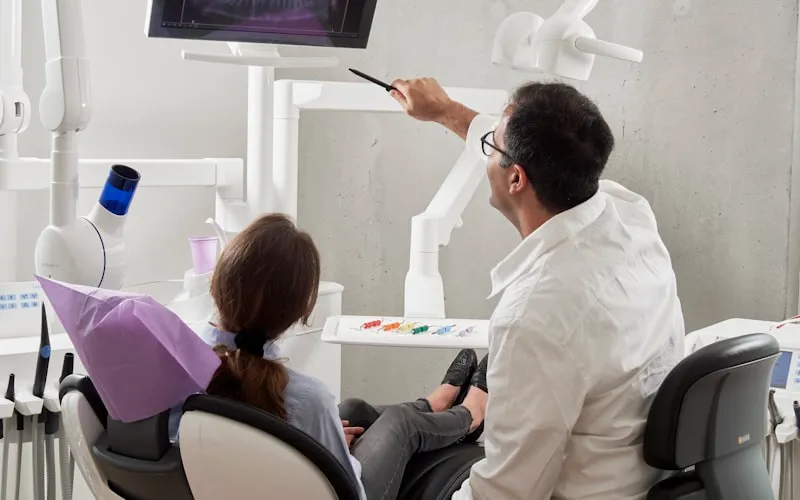
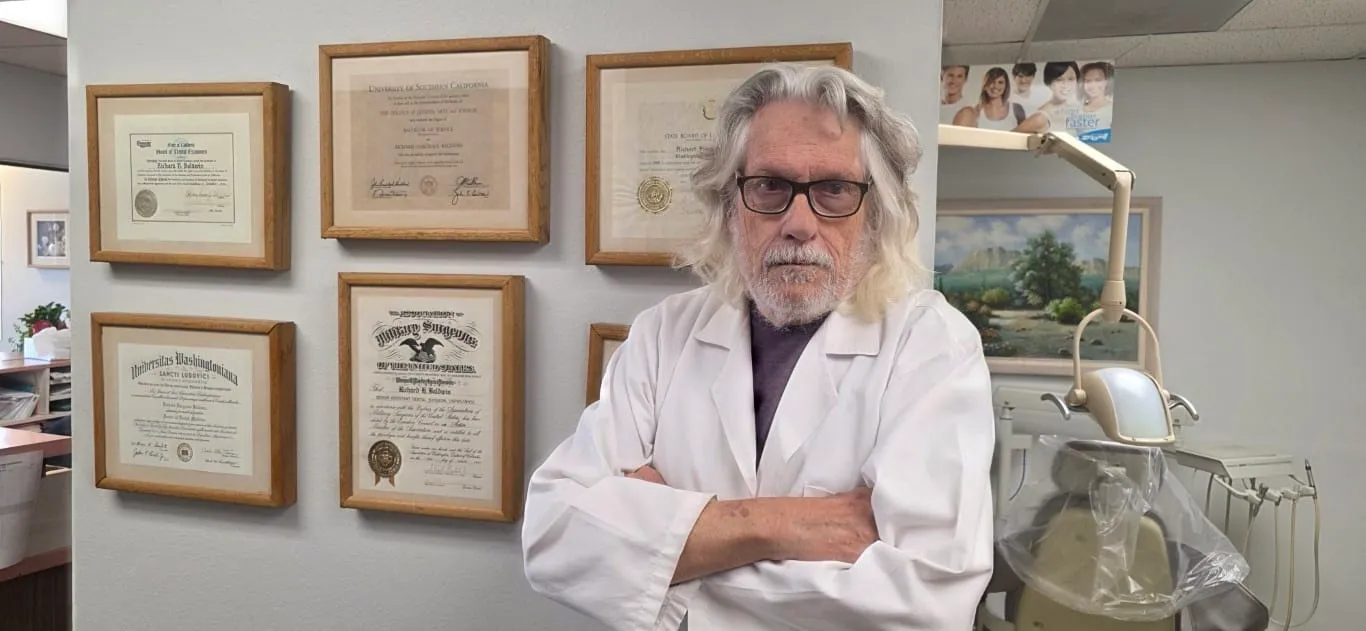 Dr. Richard Baldwin, DMDYour Huntington Beach dentist since 1979
 Full-mouth deep cleaning for $250, with a free consultation and X-rays included. We assess your gum health and explain the recommended treatment before care begins.
What's included
Treatment is based on a periodontal evaluation · Cannot combine with other offers
Disclaimer: The $250 offer covers full-mouth deep cleaning, with a consultation and X-rays at no extra charge. A periodontal evaluation determines whether deep cleaning is appropriate. Any other recommended care is discussed and quoted before treatment. Cannot be combined with other offers.
Gum disease in Huntington Beach patients usually announces itself quietly. There is no toothache, no obvious emergency — just gums that bleed when you brush, or breath that will not stay fresh. That is precisely what makes it dangerous. By the time it becomes uncomfortable, the infection has often moved beneath the gumline and begun destroying the bone that holds teeth in place. Gum disease, not decay, is the leading cause of tooth loss in adults.
The disease runs on a spectrum. Gingivitis is inflammation of the gum tissue alone, and it is genuinely reversible. Periodontitis is what it becomes when the bacteria establish themselves in pockets below the gumline and start eroding bone — a stage that can be halted and controlled, but not reversed, because lost bone does not return. Dr. Baldwin treats both here in our Huntington Beach office with deep cleaning and ongoing periodontal maintenance. Read our guides to the warning signs of gum disease and what a deep cleaning involves.
Healthy gums do not bleed when you brush. Bleeding is not sensitivity — it is inflammation, and it is the earliest signal worth acting on.
What periodontal treatment protects — starting with the teeth you already have.
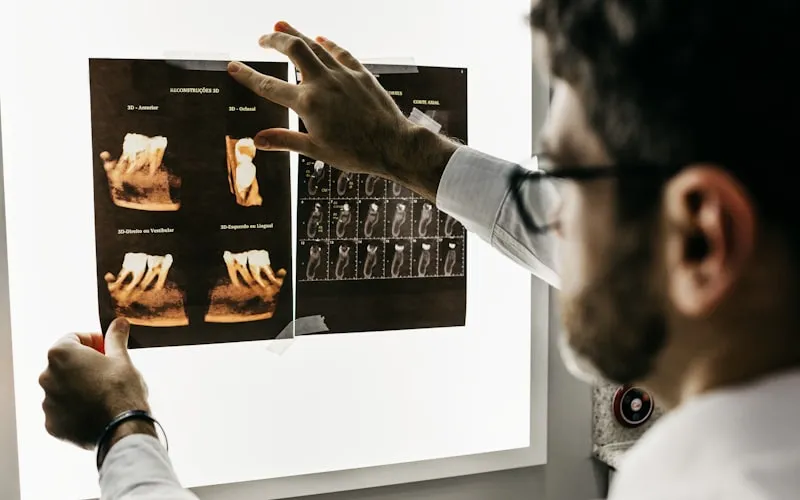
Periodontitis destroys the bone holding your teeth in place, and that bone does not regenerate on its own. Treating the infection halts the process before teeth become loose.
Gingivitis — the first stage — is genuinely reversible with a thorough cleaning and better home care. Caught early, this is one of the few dental problems that fully resolves.
Gums that bleed when you brush are inflamed, not fragile. Removing the bacteria under the gumline settles that inflammation, usually within a few weeks.
Bacteria in deep gum pockets is a common cause of breath that mouthwash never fixes. Cleaning out the pockets addresses the source instead of masking it.
Gum disease is the leading cause of adult tooth loss — ahead of decay. Keeping your own teeth is almost always better and cheaper than replacing them.
Scaling and root planing is a recognised periodontal procedure, and most dental plans cover a meaningful share of it. We verify your coverage before treatment.
Measured, staged, and re-checked against your own baseline numbers rather than guesswork.
Dr. Baldwin measures the pocket depth around every tooth with a fine probe and records the numbers. Healthy gums measure 1–3mm; deeper pockets indicate where the infection has taken hold. This chart becomes the baseline we measure progress against.
Probing shows the soft tissue picture; X-rays show whether bone has already been lost around the roots. Together they tell us whether you have gingivitis or established periodontitis.
We numb the area, then clean hardened tartar and bacteria from below the gumline and smooth the root surfaces so gum tissue can reattach. Usually done one half or one quadrant of the mouth at a time so you are never fully numb at once.
About four to six weeks later we re-probe the same pockets and compare the numbers to your baseline chart. This is the objective test of whether the treatment worked — not how your gums feel.
Once treated, gums need cleaning more often than the standard six months — typically every three to four months — because the pockets refill with bacteria faster. This is how the result is kept.
Gum disease is easy to dismiss because it rarely hurts in the early stages. Most people notice a little blood in the sink and assume they brushed too hard. If any of the signs below are familiar, a periodontal exam is worth booking — early treatment is dramatically simpler than late treatment.
Risk rises with smoking, diabetes, certain medications, pregnancy, and family history. If any of those apply to you, mention it at your visit so we can chart more carefully.
Gingivitis is the first stage — bacteria along the gumline inflame the tissue, gums bleed and look red, but the bone underneath is untouched. This stage is fully reversible with a thorough cleaning and consistent home care.
Early periodontitis begins when that inflammation pushes below the gumline and pockets form between tooth and gum. Pocket depths move past the healthy 1–3mm range, and the first bone loss appears on X-rays.
Advanced periodontitis is when pockets deepen further, more bone is lost, and teeth begin to loosen or shift. Treatment at this stage is about halting the damage and keeping the teeth — not restoring what has gone.
| Feature | For gum disease Deep Cleaning | Regular Cleaning |
|---|---|---|
| Where it cleans | Deep Cleaning Below the gumline, root surfaces | Regular Cleaning Above the gumline |
| Anesthesia | Deep Cleaning Area numbed first | Regular Cleaning None needed |
| Number of visits | Deep Cleaning Usually split by quadrant | Regular Cleaning One visit |
| Follow-up interval | Deep Cleaning Every 3–4 months | Regular Cleaning Every 6 months |
| Who it is for | Deep Cleaning Pockets deeper than 3mm | Regular Cleaning Healthy gums, prevention |
Our current full-mouth deep cleaning offer is $250, with a free consultation and X-rays included. The periodontal evaluation shows whether deep cleaning is appropriate. We explain and quote any other recommended care before treatment begins.
Most dental plans cover a share of periodontal treatment. We can check your benefits and explain how they apply to the offer before you decide.
Call our Huntington Beach office at (714) 536-2571 and we will verify your periodontal benefits before treatment begins.
Everything you need to know about gum disease treatment at our Huntington Beach practice.
Gingivitis is inflammation of the gum tissue only, and it is reversible — the gums bleed and look red, but no bone has been lost yet. Periodontitis is the later stage, where the infection has spread below the gumline and started destroying the bone that anchors your teeth. That bone loss is permanent. The practical difference matters: gingivitis can be fully resolved, while periodontitis is managed and halted rather than cured.
A regular cleaning removes plaque and tartar from the visible tooth surfaces above the gumline. A deep cleaning — clinically called scaling and root planing — goes beneath the gumline to remove hardened deposits from the root surfaces inside the gum pockets, then smooths those roots so the gum tissue can reattach. Because it works below the gumline, the area is numbed first, and it is usually split across two or more visits.
Usually, yes. Healthy gums do not bleed when you brush or floss normally. Bleeding is a sign the tissue is inflamed by bacteria along the gumline, which is the earliest stage of gum disease. It is very common and very treatable at that point — but it is not something to wait out, because untreated inflammation progresses.
Gum tissue that has receded does not grow back on its own. What treatment can do is stop the recession from continuing and remove the infection driving it. For recession that exposes root surfaces and causes sensitivity or aesthetic concern, a gum graft performed by a periodontist can cover the area — Dr. Baldwin will tell you if your case warrants that referral.
The procedure itself is done under local anesthesia, so you should not feel pain during it. Afterward the gums are often tender for a day or two and teeth can feel briefly sensitive to cold as the roots are exposed to normal temperature again. Most patients manage that with over-the-counter pain relief and find it settles quickly.
Our current full-mouth deep cleaning offer is $250 and includes a free consultation and X-rays. The periodontal evaluation determines whether deep cleaning is appropriate. If other care is needed, we explain it and quote it before treatment. Call our Huntington Beach office at (714) 536-2571 to discuss the offer.
Once pockets have formed, the bacteria that caused the disease recolonise faster than in a healthy mouth. The standard six-month interval is designed for healthy gums; treated gums need periodontal maintenance every three to four months to stay stable. Skipping back to twice a year is the most common reason treated gum disease returns.
Research has consistently found associations between periodontal disease and conditions including diabetes, cardiovascular disease, and adverse pregnancy outcomes. The relationship with diabetes appears to run in both directions — poorly controlled blood sugar worsens gum disease, and gum infection makes blood sugar harder to control. Tell us about your medical conditions so we can plan treatment around them.
Not usually. Dr. Baldwin treats most gum disease here in our Huntington Beach office with scaling and root planing followed by periodontal maintenance. Advanced cases — deep pockets that do not respond to deep cleaning, cases needing surgical access, or gum grafting — are referred to a periodontist. He will tell you honestly which category you fall into rather than treating beyond what is appropriate.
Gingivitis can be fully reversed. Periodontitis can be halted and controlled but not undone, because the bone already lost does not return. That is why the early signs matter so much — bleeding gums treated promptly is a very different situation from loose teeth ten years later.
Written and clinically reviewed by Dr. Richard Baldwin, DMD General & cosmetic dentist in Huntington Beach since 1979 · Washington University School of Dental Medicine · Updated
This page is general dental information from a practicing dentist, not a diagnosis. Treatment recommendations and costs are confirmed at an in-person exam.
Book a periodontal exam with Dr. Richard Baldwin in Huntington Beach. You will get the actual pocket-depth numbers for your own mouth and a clear explanation of what stage you are at.
Serving Huntington Beach, Fountain Valley, Westminster, Costa Mesa, Seal Beach, Santa Ana, Anaheim, Newport Beach, Long Beach, Irvine & Tustin
Expert tips and insights to keep your smile healthy and bright.
 Sep 20, 2026
 Bleeding gums usually mean early gum disease; receding gums can mean gum disease, hard brushing or grinding. A Huntington Beach dentist explains causes, fixes and when to worry.
Read Article Jul 9, 2026
 A deep cleaning goes below the gum line to treat gum disease. Learn the difference from regular cleanings, when you need one, and what to expect.
Read Article Jun 9, 2026 Nearly half of adults over 30 have gum disease. Learn the early warning signs and treatment options to protect your teeth and overall health.
Read Article