Jump to a section
Patients are often surprised that dental implant “recovery” is two separate things: the few days of soreness after surgery, and the several months the implant needs to fuse with your jaw. Knowing which clock you are on — and what is normal at each stage — takes most of the worry out of the process.
I am Dr. Richard Baldwin, DMD, and I have restored implants for Huntington Beach patients for decades. At HB Dentist the implant itself is placed by the oral surgeon we partner with; I plan the case, see you for healing checks, and make the final crown. Here is the timeline we walk patients through.
Before Surgery: The Two-Clock Overview
| Phase | What is happening | How you feel |
|---|---|---|
| Days 1–3 | Clot forms, swelling peaks | Sore, puffy; soft foods |
| Days 4–10 | Gum tissue closes over | Steady improvement |
| Weeks 2–3 | Stitches out; surface healing done | Mostly normal |
| Months 1–6 | Osseointegration — bone grows onto the implant | Nothing; you forget it is there |
| Month 4–6 | Uncover, place healing abutment (if needed) | Mild tenderness for a day or two |
| Month 4–9 | Scan, lab makes crown, crown attached | Done |
If you need a bone graft or sinus lift first, add 3–6 months of healing before the implant goes in. Our dental implant cost guide explains when grafting is needed.
Day of Surgery
Implant placement is done under local anesthesia, sometimes with IV sedation at the surgeon’s office if you prefer. The procedure for a single implant takes about an hour. You leave with gauze in place, written instructions, and prescriptions if needed.
For the rest of the day: keep light pressure on the gauze for 30–60 minutes, rest with your head elevated, ice the cheek 20 minutes on / 20 off, and eat cool, soft food once the numbness wears off. No smoking, no straws, no rinsing, no exercise.
Days 1–3: The Peak
Swelling and soreness are worst around 48–72 hours and then turn the corner. What is normal:
- Puffiness of the cheek or lip, sometimes with light bruising.
- A dull ache controlled by alternating ibuprofen (400–600 mg) and acetaminophen (500–1,000 mg) every three hours, or the prescription you were given.
- Slight oozing that stains saliva pink for a day.
- A stiff jaw if the implant is toward the back.
Eat yogurt, eggs, smoothies (with a spoon), mashed potatoes, soup, oatmeal. From day two, rinse gently with warm salt water after meals. Brush the other teeth normally; avoid the surgical site with the brush.
Call the office if pain increases after day three rather than easing, if bleeding does not stop with 30 minutes of pressure, or if you develop a fever over 101°F.
Days 4–10: Healing You Can See
By the end of the first week most patients are off pain medication and eating a wider soft diet. The gum over the site is closing. If you had a “healing cap” placed at surgery, you may see a small metal button through the gum — that is normal and it is not the crown.
Stitches come out at the surgeon’s office at 7–14 days, or dissolve on their own. A short check with me is scheduled around the two-week mark to confirm the gum is healing well and to review the restorative plan.
Desk workers are usually back at work on day one or two; patients with physical jobs should plan on three to five days.
Weeks 2–6: Back to Normal (On the Surface)
Surface healing is essentially complete by three weeks. You can chew a normal diet, though I ask patients to keep very hard, crunchy and sticky foods away from the implant site — no nuts, hard candy or chewy bread on that side — until the crown is on. The implant must not be loaded while the bone is still growing onto it.
Keep the area exceptionally clean. Plaque around a healing implant is the main cause of early failure, so brush around the healing cap gently and use the antimicrobial rinse if one was prescribed.
Months 1–6: Osseointegration
This is the quiet, important phase. Bone cells grow onto the titanium surface of the implant until it is locked in place, a process called osseointegration. It typically takes 4–6 months — a little faster in the lower jaw, where bone is denser, and a little slower in the upper jaw or after grafting.
You will not feel anything happening. The implant is under the gum, and life is normal. The two things that help are not smoking (nicotine measurably reduces integration success) and keeping any scheduled check-ups so we can confirm on X-ray that the bone is filling in as expected.
Months 4–6: Uncovering and Impressions
Once the surgeon confirms the implant is solid, a small procedure exposes the top of it and a healing abutment is placed to shape the gum. This takes a few minutes under local anesthesia and causes only mild tenderness for a day or two. About two weeks later, when the gum has shaped around the abutment, I take a digital scan for the crown.
Months 4–9: The Final Crown
The lab makes a custom zirconia or porcelain crown on an abutment that screws into the implant. At the delivery visit — about two weeks after the scan — I attach the abutment, check the fit and bite, and secure the crown. You walk out with a tooth that looks and works like the one you lost. Details of the restorative side are on our dental implants page.
After the Crown: Keeping It for Life
Implants do not decay, but the gum and bone around them can get infected (peri-implantitis) exactly the way gums around natural teeth do. Floss around the crown daily, keep six-month cleanings, and wear a night guard if you grind. Cared for this way, the implant routinely lasts 25 years or a lifetime; the crown on top typically needs replacing after 10–15 years. Our guide on how long dental implants last goes deeper.
The Bottom Line
Expect a week of soft foods and soreness, two to three weeks to feel completely normal, and four to six months for the implant to fuse before the crown goes on. If you are considering an implant in Huntington Beach or are in the middle of recovery and unsure whether something is normal, call (714) 536-2571 or book a consultation — we would rather look at it than have you wonder.
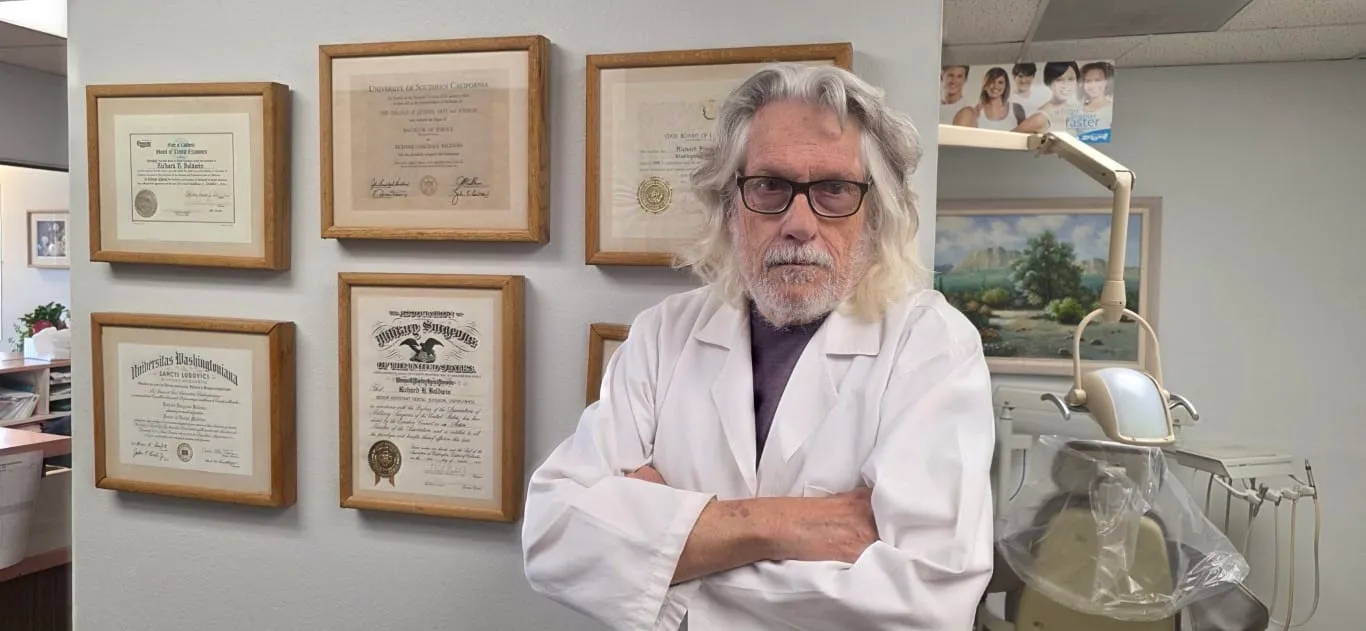
Written and clinically reviewed by Dr. Richard Baldwin, DMD General & cosmetic dentist in Huntington Beach since 1979 · Washington University School of Dental Medicine · Updated
Sources & further reading
- Dental implants — American Dental Association · MouthHealthy
- Dental implant surgery — American Association of Oral and Maxillofacial Surgeons
- Gum disease and implant health — American Academy of Periodontology
This guide is general dental information from a practicing dentist, not a diagnosis. Treatment recommendations and costs are confirmed at an in-person exam.