Jump to a section
- How Long Do Dental Implants Last? The Short Answer
- The Implant Post vs. the Crown: Two Different Lifespans
- What Long-Term Implant Follow-Up Shows
- 7 Factors That Determine How Long Dental Implants Last
- Warning Signs Your Implant May Be Failing
- How to Make Your Dental Implant Last a Lifetime
- Choosing an Experienced Implant Dentist in Huntington Beach
- Frequently Asked Questions
If you are considering dental implants, one question sits above all the others: how long do dental implants last? The answer sounds simple on paper — 25 years to a lifetime for the implant itself — but the reality I have watched play out in my Huntington Beach practice over the past decades is more nuanced, and worth understanding before you commit.
I am Dr. Richard Baldwin, DMD. I have been restoring dental implants since the early years of osseointegration technology in the United States, and many of the patients I treated in my first decade of implant work are still on my recall list today. That gives me something no textbook and no manufacturer study can offer: real, longitudinal evidence of what actually happens to implants over 20, 30, and 40 years in real mouths.
How Long Do Dental Implants Last? The Short Answer
A modern, correctly placed dental implant is designed to last a lifetime. The clinical literature reports 10-year success rates between 95% and 98%, and my own patient records confirm that number holds up over even longer periods when patients maintain good oral hygiene and keep their regular checkups.
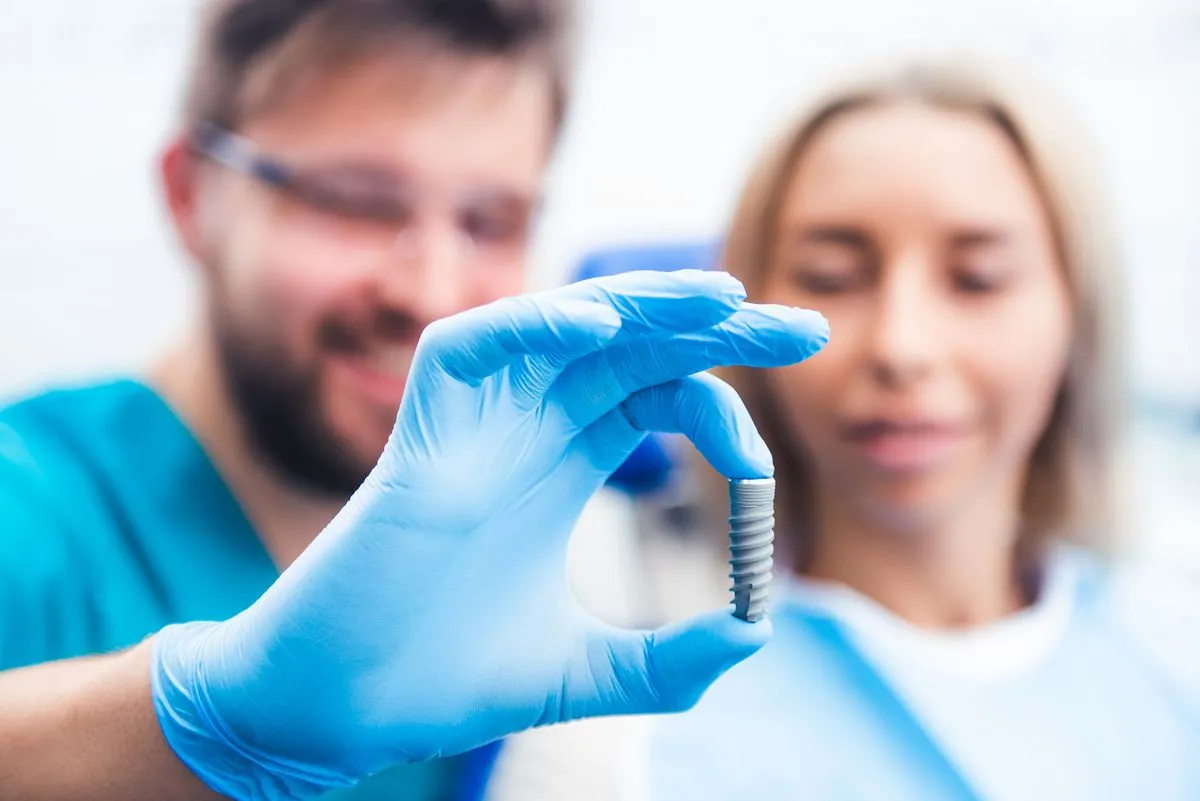
That said, “the implant” is actually two separate parts with two different lifespans:
- The implant post (the titanium screw in your jawbone): 25 years to a lifetime
- The crown (the visible tooth on top): 10 to 15 years, often longer with newer materials
So when someone asks me how long dental implants last, the honest answer is this: the foundation is essentially permanent, but the visible tooth will likely need to be refreshed once during your lifetime. That is very different from bridges or dentures, which typically require full replacement every 10 to 15 years.
The Implant Post vs. the Crown: Two Different Lifespans
Understanding the two-part nature of a dental implant is the single most important thing patients can grasp about longevity.
The titanium post is biologically integrated into your jawbone. Once osseointegration is complete, your body treats it as part of your skeleton. Titanium does not corrode, does not decay, and is not attacked by bacteria the way natural tooth roots can be. Failure of the post itself is rare after the first year — usually caused by peri-implantitis (gum infection around the implant) or major mechanical trauma.
The crown is a different story. It sits in your mouth, meets opposing teeth thousands of times a day, and endures thermal cycles from every meal. Porcelain-fused-to-metal crowns typically last 10 to 15 years. Full zirconia crowns, which we use more often now, are already showing signs of lasting 20 years or more in the patients I have followed. When a crown wears or chips, replacement is straightforward — we unscrew the old crown from the abutment and fit a new one, usually in one appointment.
What Long-Term Implant Follow-Up Shows
Every dentist can quote the studies. Fewer can tell you what actually happens decades of practice. Here is what my records show:
- Patients who received implants in the 1980s and early 1990s — using older, machined-surface implant designs — still have functioning implants in the majority of cases. The 30-year survival for that generation is closer to 85% in my records. Not bad, considering the technology was in its infancy.
- Patients who received implants after 2005 — with modern surface treatments, cone-beam CT planning, and better prosthetic protocols — show a dramatically higher survival rate. I have only lost a handful in that entire cohort.
- The most common reason for late failure is not the implant. It is the patient. Poorly controlled diabetes, heavy smoking, and skipped hygiene visits are the three consistent predictors of long-term failure in my chair.
This is why I tell every patient at their consultation: your implant will outlast most of your other restorations, if you take care of it. For how that longevity compares to alternatives, see my dental implants vs bridges comparison.
7 Factors That Determine How Long Dental Implants Last
Not every implant lasts the same length of time. These are the factors I watch most closely:
- Bone quality at placement. Dense bone at the site gives the implant a stronger foundation. Poor bone requires grafting or angled placement — both viable, both worth doing right.
- Surgical technique. An implant placed at the wrong angle, too shallow, or too deep is at higher risk of failure years later. Cone-beam CT planning has largely solved this.
- Oral hygiene at home. Peri-implantitis behaves like gum disease around a natural tooth and can slowly erode the bone support around the implant if it is not controlled.
- Regular professional cleanings. Two to four times per year, depending on your history. According to long-term research indexed on PubMed, patients who maintain routine hygiene visits show significantly lower late-stage failure rates.
- Smoking. Smokers experience implant failure rates two to three times higher than non-smokers. If you smoke, we can still place implants — but I will tell you the honest odds.
- Systemic health. Uncontrolled diabetes, osteoporosis medications like bisphosphonates, and immune-suppressing conditions all raise the risk of complications.
- Bite forces. Grinders and clenchers stress implants harder than non-grinders. A night guard is inexpensive insurance for a $4,000 implant.
Warning Signs Your Implant May Be Failing
Most implants that fail send signals before they give up entirely. Watch for:
- Persistent pain or tenderness at the implant site, especially when chewing
- Visible gum recession exposing the metal of the abutment or post
- Looseness or micro-movement when you tap the crown
- Bleeding or pus around the implant during brushing
- A sudden change in how your bite feels
If you notice any of these, do not wait for your next scheduled cleaning. Early intervention often saves the implant. I have gone deeper on this in my dental implant failure guide, including the differences between early failure (within the first year) and late failure that shows up years down the road.
How to Make Your Dental Implant Last a Lifetime
The maintenance routine for a dental implant is simpler than most patients expect. Brush twice a day with a soft-bristle brush, floss once daily around the crown, and see us every six months for a professional cleaning and radiograph review. Once a year, I take a bitewing image of the bone level around each implant so we can catch peri-implantitis at the earliest stage possible.
That is essentially it. If you do those three things consistently, the odds are very high that your implant will still be there when you are eighty. For a bigger-picture view on cleaning cadence, see our note on how often you should visit the dentist.
Choosing an Experienced Implant Dentist in Huntington Beach
Experience matters more with implants than with almost any other dental procedure. The placement decisions I make in the first 20 minutes of surgery — angle, depth, timing of loading — will determine whether the implant is still there in 30 years. That is not a skill you develop in a weekend continuing-education course. It is built over thousands of cases and decades of following those cases forward in time.
HB Dentist coordinates restorative planning and follow-up with the oral surgeon who performs implant placement. The team determines which imaging and maintenance interval are appropriate for each patient. To see whether an implant may be right for you, learn more about our dental implants service or request a consultation. For published ranges and cost questions, see the dental implants cost guide for Huntington Beach.
Frequently Asked Questions
How long do dental implants last on average?
The implant post lasts 25 years to a lifetime for most patients. The crown attached to it typically lasts 10 to 15 years before it may need replacement. Ten-year clinical success rates for implants are consistently reported between 95% and 98%.
Can a dental implant last 30 years or more?
Yes. I have patients in my Huntington Beach practice with implants placed in the 1990s that are still functioning today. Longevity beyond 30 years is realistic when the implant is placed correctly and the patient maintains good oral hygiene and regular checkups.
What causes dental implants to fail after many years?
Late-stage implant failure is most often caused by peri-implantitis (a gum-disease-like infection around the implant), heavy smoking, poorly controlled diabetes, or excessive bite forces from grinding. Skipping professional cleanings is the single biggest modifiable risk factor.
Do I need to replace the crown on my implant?
Most likely, yes — once during your lifetime. Crowns wear down over 10 to 20 years depending on material and bite forces. The good news is that replacing the crown is a simple, non-surgical appointment: we unscrew the old crown from the abutment and fit a new one.
Are older implants (from the 1990s) still reliable today?
In many cases, yes. My patients who received early-generation implants in the 1980s and 1990s still have functioning restorations in the majority of cases. Modern implants have better success rates, but the older technology holds up remarkably well when maintained.
Wondering how long your dental implant will last? Call HB Dentist in Huntington Beach — Dr. Baldwin has been placing and following implants for decades and will give you a straight answer based on your specific case.
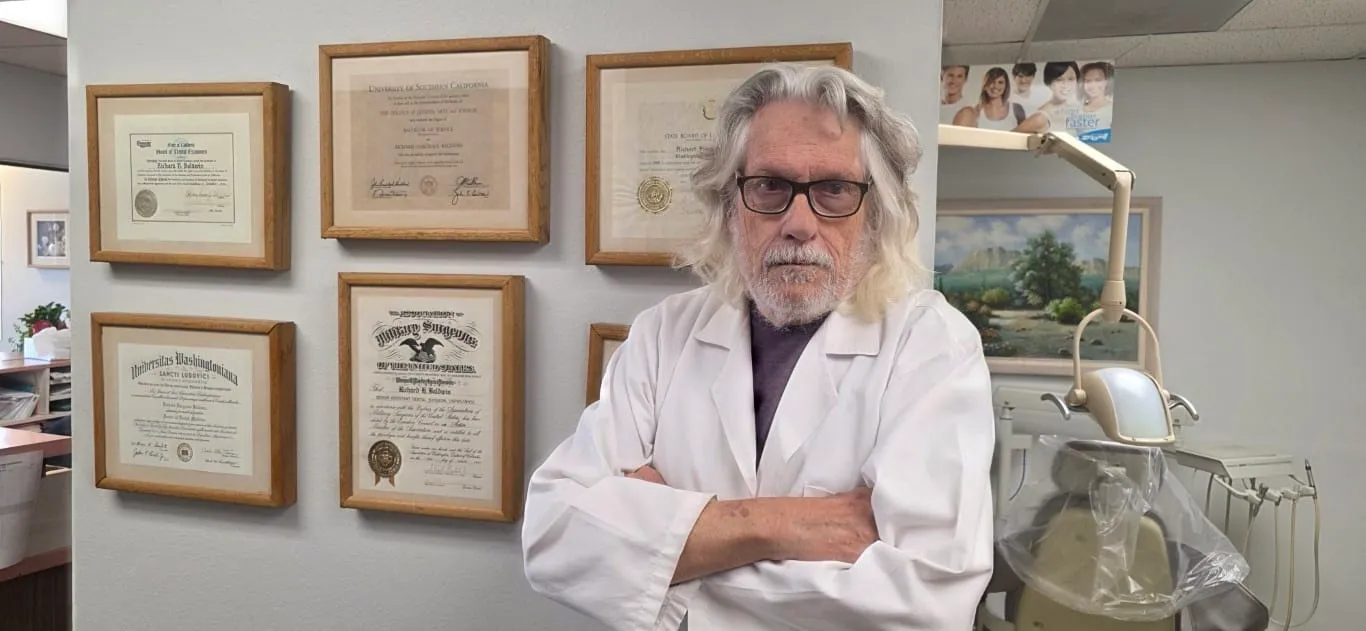
Written and clinically reviewed by Dr. Richard Baldwin, DMD General & cosmetic dentist in Huntington Beach since 1979 · Washington University School of Dental Medicine · Updated
Sources & further reading
- Dental implants — American Dental Association · MouthHealthy
- Dental implant surgery — American Association of Oral and Maxillofacial Surgeons
- Gum disease and implant health — American Academy of Periodontology
This guide is general dental information from a practicing dentist, not a diagnosis. Treatment recommendations and costs are confirmed at an in-person exam.