
Jump to a section
- What Are Dental Implants and Dental Bridges?
- Dental Implants vs Bridges: Quick Comparison
- When a Dental Implant Is the Better Choice
- When a Dental Bridge Makes More Sense
- Cost of Dental Implants vs Bridges in Huntington Beach
- Longevity, Maintenance, and Bone Health
- How We Help You Decide at HB Dentist
- Frequently Asked Questions
If you have lost a tooth in Huntington Beach and are weighing your options, the choice between dental implants vs bridges is one of the most important decisions you will make for your smile. Both restore chewing function and cosmetic appearance, but they take very different paths to get there — and one may be dramatically better for your specific situation.
I am Dr. Richard Baldwin, DMD, and I have been restoring smiles at our Huntington Beach practice for decades. In that time, dental implant technology has moved from experimental to gold-standard, while modern bridges have become more conservative and more aesthetically refined. Both are excellent tools. The right one depends on your bone, your budget, your neighboring teeth, and your timeline. This guide walks through the full comparison so you can arrive at your consultation with real clarity instead of anxiety.
What Are Dental Implants and Dental Bridges?
A dental implant is a small titanium (or occasionally zirconia) post that replaces the root of a missing tooth. It is surgically placed into the jawbone, where it fuses with the bone over three to six months in a process called osseointegration. Once healed, a custom crown is attached on top. The result is a freestanding, permanent replacement that looks and functions like the tooth you lost.
A dental bridge, by contrast, does not replace the root. It replaces the visible tooth by anchoring an artificial tooth (the pontic) between two crowns cemented onto the neighboring teeth. Those neighbors become the abutments — the “bridge supports” that hold the replacement in place. Traditional bridges are typically completed in two visits over two to three weeks.
Same goal, two very different paths. Understanding what each actually does inside your mouth is where the decision starts.
Dental Implants vs Bridges: Quick Comparison
| Factor | Dental Implant | Dental Bridge |
|---|---|---|
| Treatment time | 3–6 months (bone healing) | 2–3 weeks |
| Typical lifespan | 25+ years to lifetime | 10–15 years |
| Neighboring teeth | Untouched | Must be reshaped for crowns |
| Bone preservation | Yes — stimulates jawbone | No — bone loss continues under pontic |
| Typical cost in Huntington Beach | $3,000–$5,000 per tooth | $2,500–$5,000 per unit |
| 10-year success rate | 95–98% | 85–90% |
| Maintenance | Brush and floss like natural teeth | Special floss threader required |
The table shows the pattern that will drive most decisions: implants win on longevity and biology, bridges win on speed and — sometimes — on upfront cost.
When a Dental Implant Is the Better Choice
If your neighboring teeth are healthy and you have adequate jawbone, an implant is almost always the more conservative long-term choice. A bridge requires me to grind down two otherwise pristine teeth to serve as crown supports. Once enamel is removed, it does not grow back — and those crowned teeth statistically become more vulnerable to decay and root canal issues over the following decade.
Choose an implant if any of these apply to you:
- You are under 60 and want a replacement that lasts decades, not one you will redo in your 70s
- Your neighboring teeth are pristine and you don’t want to file them down
- You have already lost some bone in the area (implants stimulate the jaw and slow further loss)
- You are missing a back molar with no tooth behind it to anchor a bridge
- You want to floss normally instead of threading around a bridge every night
Younger patients in particular benefit from the longevity. A 45-year-old who chooses a bridge today may be looking at replacement in their late 50s. A dental implant placed correctly should still be there in retirement. For a deeper look at that, see our guide on how long dental implants last.
When a Dental Bridge Makes More Sense
Bridges have not gone away for good reason. In several clinical scenarios they are still the correct answer.
Consider a bridge if:
- You need a replacement in weeks, not months (a wedding, a work engagement, a move)
- You have significant bone loss and cannot receive implants without extensive grafting
- You have a medical condition (uncontrolled diabetes, active gum disease, radiation history) that complicates implant surgery
- The neighboring teeth already need crowns anyway — a bridge accomplishes two goals in one restoration
- Your insurance covers a substantial portion of bridge work but little to none of implant work
Bridges also carry lower upfront surgical risk because they do not involve placing anything into bone. For patients who are anxious about oral surgery, that reduced complexity can be the deciding factor. If you are also weighing removable options, see our related comparison of dental implants vs dentures.
Cost of Dental Implants vs Bridges in Huntington Beach
Sticker price is where most patients get stuck. A traditional three-unit bridge in Huntington Beach typically runs $2,500 to $5,000, while a single dental implant with crown runs $3,000 to $5,000. On day one, that can make bridges look cheaper — sometimes.
The math changes when you extend the timeline. Bridges usually need replacement every 10 to 15 years. Over a 30-year period, that means one bridge replaced twice ($7,500–$15,000 total) versus one implant placed once. Insurance coverage is also shifting: most plans still cover a portion of bridge work at standard restorative rates, and a growing number now include implant benefits. Our team verifies your coverage before your consultation so you see the real out-of-pocket difference for both options.
For a complete breakdown, read our dental implant cost guide for Huntington Beach. CareCredit and in-house payment plans are available for either procedure.
Longevity, Maintenance, and Bone Health
The single biggest biological difference between implants and bridges is what happens to your jawbone. When you lose a tooth, the bone underneath begins to resorb — your body reallocates the minerals elsewhere because that section is no longer being loaded by chewing forces. An implant loads the bone the same way a natural root does, which preserves the ridge and the shape of your face over time.
A bridge does not touch the bone underneath the missing tooth. Ten years after placement, most bridge patients show visible bone loss under the pontic, and the gumline may recede beneath it, exposing a small dark triangle. This is usually cosmetic rather than functional, but it is the trade-off you make for the faster, less invasive procedure.
According to the American Dental Association, maintaining a dental implant is nearly identical to caring for a natural tooth — brush twice daily and floss once. Bridges require a floss threader or water flosser to clean underneath the pontic, which some patients find inconvenient over the years.
How We Help You Decide at HB Dentist
A missing-tooth consultation reviews the gap, bite, gums, neighboring teeth, and available records. The restorative and surgical teams determine which imaging is clinically appropriate for an implant plan. We can then compare the likely stages, provider roles, and itemized costs of an implant and a bridge. Learn more about our dental implants and crowns and bridges options, or request a consultation to get started.
Frequently Asked Questions
Is a dental implant or bridge more painful?
Neither procedure is particularly painful for most patients. Bridge preparation is done under local anesthesia and feels similar to a large filling. Implant placement is also done under local anesthesia at the oral surgeon’s office. Post-op soreness typically lasts a few days and is well managed with over-the-counter pain relievers.
Can I get a bridge if I already had an implant fail?
Yes, in most cases. If an implant fails and the area has adequate bone and healthy neighboring teeth, a bridge is a common fallback. Your dentist may recommend a healing period before impressions.
Do dental implants or bridges look more natural?
Both look excellent when done well. Implants have a slight edge because the crown emerges from the gumline the same way a natural tooth does, with no visible connectors. Modern porcelain bridges are also lifelike but require careful shaping around the pontic to avoid a blocky appearance.
Does insurance cover dental implants vs bridges differently?
Most dental insurance plans still cover bridges more consistently than implants, though implant coverage has expanded significantly in the last five years. We verify your specific benefits before your consultation and present both options with real dollar figures for your plan.
How long do I have to decide after losing a tooth?
You have some time, but not indefinite time. Bone loss begins within weeks of tooth extraction. If an implant is your preferred path, the earlier you consult, the more likely you can proceed without a bone graft. Most patients begin planning within three to six months of losing a tooth.
Ready to compare dental implants and bridges for your specific case? Call HB Dentist in Huntington Beach or request a consultation and ask for an itemized plan.
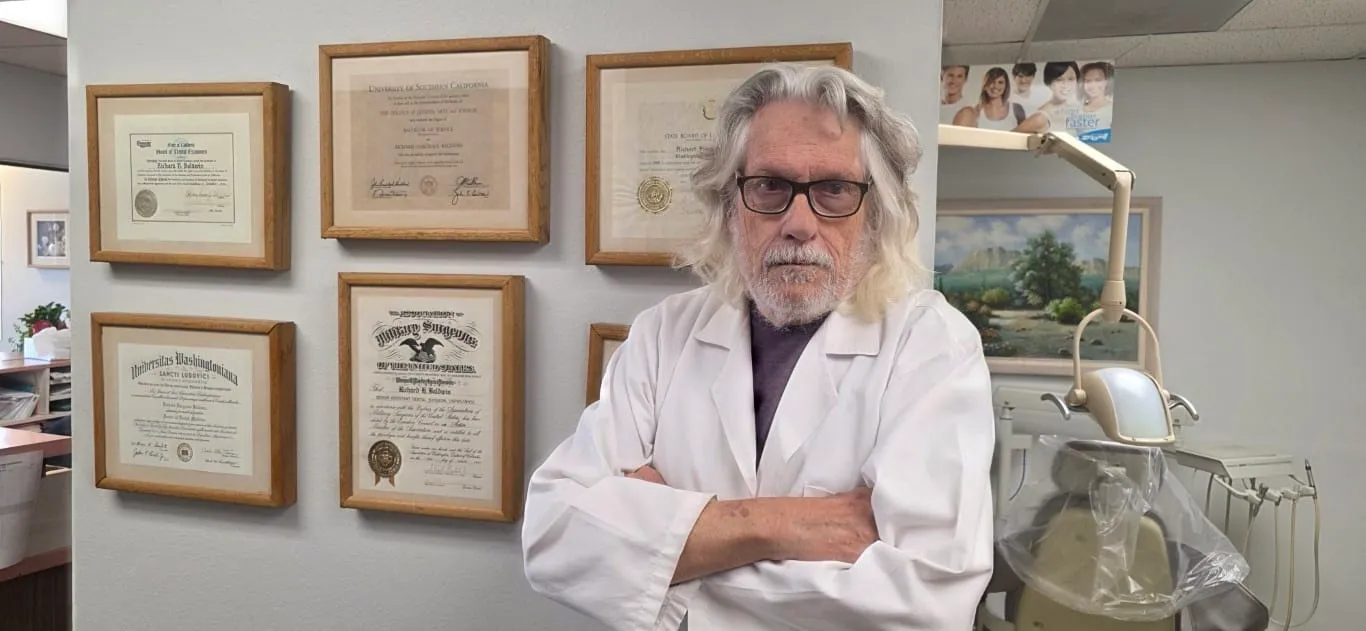
Written and clinically reviewed by Dr. Richard Baldwin, DMD General & cosmetic dentist in Huntington Beach since 1979 · Washington University School of Dental Medicine · Updated
Sources & further reading
- Dental implants — American Dental Association · MouthHealthy
- Dental implant surgery — American Association of Oral and Maxillofacial Surgeons
- Gum disease and implant health — American Academy of Periodontology
This guide is general dental information from a practicing dentist, not a diagnosis. Treatment recommendations and costs are confirmed at an in-person exam.