Jump to a section
If you are missing a tooth and your dentist has mentioned a bridge, the first question is usually the same one I hear in my Huntington Beach office every week: how much does a dental bridge cost, and is it worth it compared to an implant?
I am Dr. Richard Baldwin, DMD, and I have been placing crowns and bridges in Huntington Beach since 1979. This guide gives you real 2026 numbers, explains what moves the price up or down, and tells you honestly when I recommend a bridge and when I do not.
Dental Bridge Cost in Huntington Beach: The Numbers
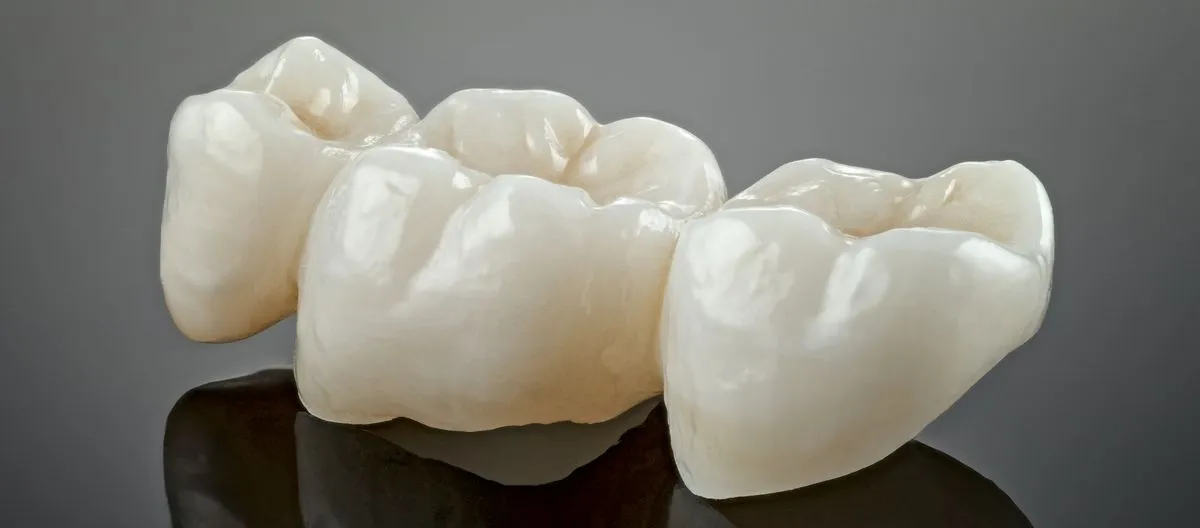
A traditional three-unit bridge — the most common kind — replaces one missing tooth by crowning the tooth on each side and suspending a false tooth (a pontic) between them. In Huntington Beach it costs $2,500–$6,000 in 2026.
| Bridge type | What it is | Typical Huntington Beach cost |
|---|---|---|
| Three-unit traditional bridge | 2 crowns + 1 pontic | $2,500–$6,000 |
| Four-unit bridge | 2 crowns + 2 pontics | $4,000–$8,000 |
| Cantilever bridge | 1 crown + 1 pontic (front teeth only) | $2,000–$3,500 |
| Maryland (resin-bonded) bridge | Pontic bonded to the back of neighbors | $1,500–$2,500 |
| Implant-supported bridge | 2 implants + 3–4 unit bridge | $6,000–$10,000 |
Each crown or pontic is priced as a unit at $1,000–$2,000, which is why bridge quotes are often given per unit. A three-unit bridge is simply three units.
Those prices cover the exam, digital X-rays, preparing the supporting teeth, impressions or a 3D scan, a temporary bridge, the lab-made porcelain bridge, and the cementation visit. Follow-up adjustments are included.
What Changes the Price
Material. Porcelain fused to metal (PFM) is the least expensive and still very strong for back teeth. Monolithic zirconia costs more but resists chipping and has no metal margin. Layered porcelain on zirconia is the most lifelike and the most expensive, so I reserve it for front teeth.
Number of units. Every extra pontic or crown adds $1,000–$2,000. A bridge spanning two missing teeth needs four units; spanning three needs five, and at that length I start steering patients toward implants because long bridges flex and fail sooner.
The condition of the supporting teeth. If an anchor tooth has a large old filling or decay, it may need a build-up ($200–$400) or a root canal first. Those are separate fees, and they are the main reason two patients with the “same” bridge get different quotes.
Gum health. A bridge sits against the gum, so untreated gum disease has to be handled first. A deep cleaning before a bridge is money well spent — it protects the investment.
How Insurance and Payment Work
Most dental PPO plans classify a bridge as a major service and pay about 50% after your deductible, but only up to the plan’s annual maximum of $1,000–$2,500. In practice, a $4,000 bridge on a plan with a $1,500 maximum leaves you paying roughly $2,500.
Two things help. First, if your maximum is nearly used up, we can prepare the teeth and place the temporary in December and seat the final bridge in January so two benefit years contribute. Second, we accept CareCredit and offer in-house payment splits, so the cost can be spread over several months. Our insurance and payment options page lists the PPO plans we accept.
Bridge vs Implant: What I Actually Recommend
This is the honest conversation I have with every patient missing one tooth.
A bridge makes sense when:
- The teeth on either side already have large fillings or crowns and would benefit from being crowned anyway.
- You cannot or do not want to have implant surgery (some medical conditions, heavy smoking, or a very thin jaw).
- You need the tooth replaced quickly — a bridge takes two to three weeks; an implant takes four to nine months.
An implant makes sense when:
- The neighboring teeth are healthy. Cutting down two healthy teeth to hold a bridge is something I try hard to avoid.
- You want the longest-lasting option. Implants routinely last 25 years or more, while bridges average 10–15 years.
- You want to floss normally. A bridge needs a floss threader under the pontic for life.
Cost-wise, a single dental implant with crown is $3,000–$5,000, so the up-front price is similar to a bridge. Our implants vs bridges comparison walks through the 20-year math in detail.
What to Expect at HB Dentist
Bridgework here takes two visits. At the first, I numb the area, shape the supporting teeth, take a digital scan, and fit a temporary bridge you wear for about two weeks while the lab makes the final one. At the second, I check the fit and bite, adjust as needed, and cement the bridge permanently. There is no sedation involved — local anesthesia is all most patients need, and the preparation visit is comfortable.
You will get a written treatment plan with the exact fee, your estimated insurance share, and any prerequisite work (build-ups, cleaning) listed separately, before we start. Read more about our approach on the crowns and bridges page.
Making the Decision
A dental bridge in Huntington Beach costs $2,500–$6,000, insurance usually pays about half up to your annual maximum, and the choice between a bridge and an implant comes down to the health of the neighboring teeth and how long you want the solution to last. If you would like a straight answer for your own mouth, call (714) 536-2571 or request a consultation and I will show you both options on your X-rays.
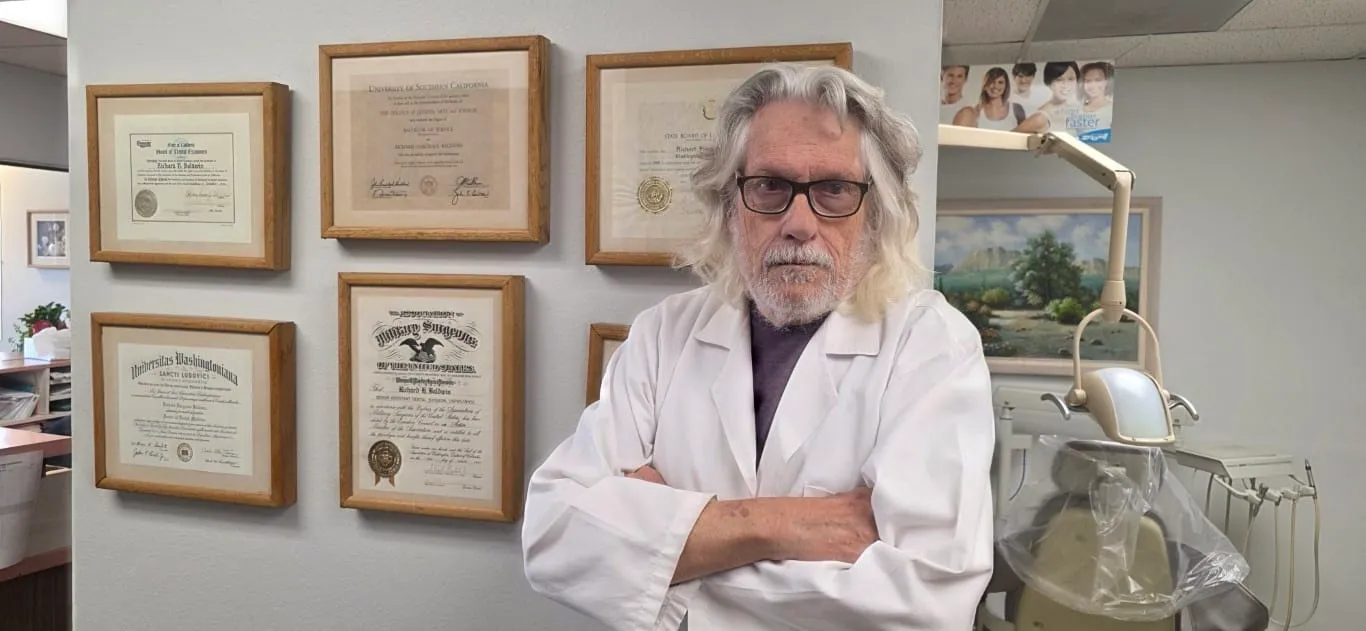
Written and clinically reviewed by Dr. Richard Baldwin, DMD General & cosmetic dentist in Huntington Beach since 1979 · Washington University School of Dental Medicine · Updated