Jump to a section
If you’ve been researching clear aligners, you’ve probably seen two names come up again and again: Invisalign and ClearCorrect. Both straighten teeth using a series of removable, transparent trays instead of metal brackets and wires. Both are FDA-cleared. And both can produce beautiful results in the right case. So how does a Huntington Beach dentist actually choose between them — and what should you know before you commit?
This guide walks through the practical differences between ClearCorrect vs Invisalign, the clinical reasons a provider might recommend one over the other, and what to expect during a consultation at our Huntington Beach office.
What ClearCorrect and Invisalign Actually Are
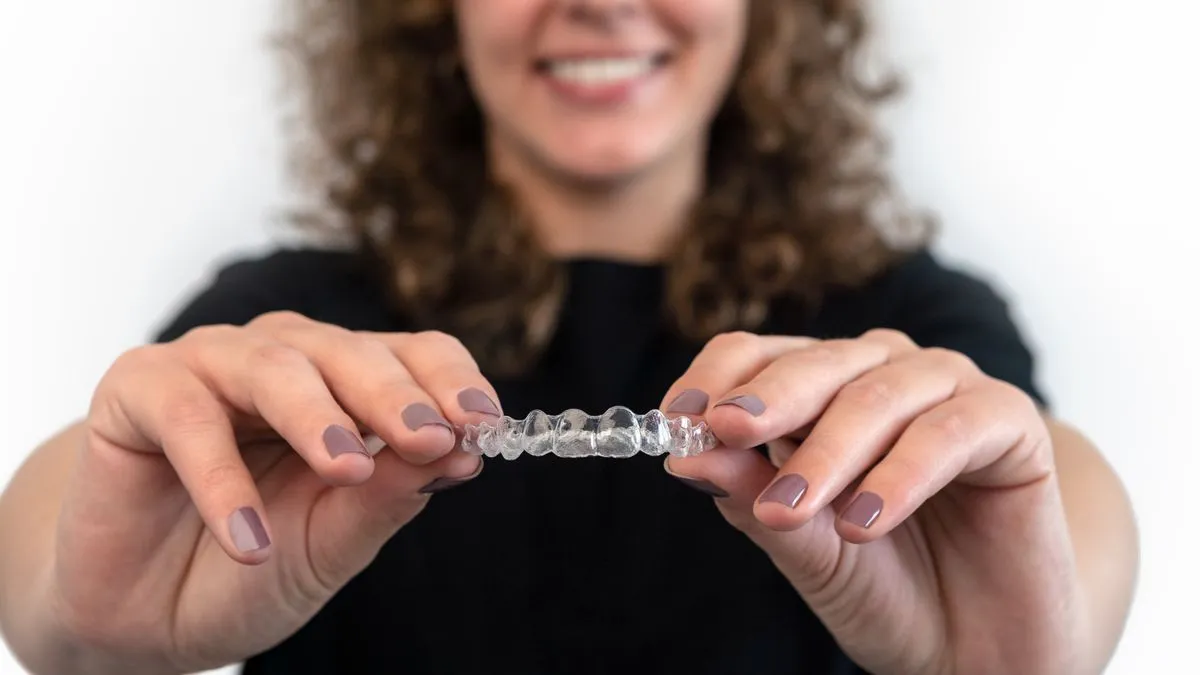
Clear aligners are custom-molded plastic trays that gently move teeth into a planned position over a series of stages. You wear each tray for a set period (typically one to two weeks), then swap to the next in the series. Because they’re removable, you take them out to eat, drink anything besides water, and brush.
- Invisalign launched in 1998 and is made by Align Technology. It’s the most widely recognized aligner brand and uses a proprietary plastic called SmartTrack.
- ClearCorrect launched in 2006 and is now owned by Straumann Group. Its trays are made from a multi-layer plastic called ClearQuartz.
Both systems work on the same core principle. The differences show up in materials, software, case planning tools, and how each brand handles complex tooth movements. For a broader primer on aligner treatment overall, see the ultimate guide to Invisalign braces.
Side-by-Side: ClearCorrect vs Invisalign
| Feature | Invisalign | ClearCorrect |
|---|---|---|
| Parent company | Align Technology | Straumann Group |
| Tray material | SmartTrack (single-layer polyurethane) | ClearQuartz (tri-layer polymer) |
| Trim style | Scalloped along gumline (varies by plan) | Straight, extends slightly onto gums |
| Attachments | Tooth-colored bumps, widely used | Also uses attachments, sometimes fewer |
| Track record | Millions of cases worldwide | Growing global adoption |
| Complex case tools | Extensive (SmartForce, mandibular advancement, etc.) | Solid for mild-to-moderate cases; expanding |
The table oversimplifies real clinical decision-making, but it’s a fair starting point. Neither brand is universally “better.” Suitability depends on your bite, the movements needed, and your dentist’s experience with each platform.
How a Dentist Actually Chooses Between Them

At our practice, the choice isn’t about brand loyalty — it’s about matching the tool to the case. A few factors guide the recommendation:
1. Complexity of tooth movement. Invisalign has a longer clinical track record with complex rotations, deep bite correction, and features like mandibular advancement for growing teens. For straightforward crowding or mild spacing, both systems can perform comparably.
2. Retention and fit at the gumline. ClearCorrect’s straight-cut trim can offer more grip on short clinical crowns. Invisalign’s scalloped trim can feel less bulky at the gums. Neither is objectively superior — it depends on your anatomy.
3. Software and predictability tools. Invisalign’s ClinCheck software is deeply developed and widely taught. ClearCorrect’s planning software has improved rapidly. Your dentist’s fluency with a given platform matters as much as the software itself.
4. Cost considerations. Lab fees for ClearCorrect are often lower, which can translate to a lower patient fee in some offices — though this varies by practice and case complexity. We discuss estimates transparently during your consultation. For local pricing context, see our Invisalign cost in Huntington Beach guide.
5. Insurance and financing. Both brands are treated similarly by most dental plans that include orthodontic coverage. What matters is whether your plan covers clear aligners at all. Our Delta Dental coverage overview explains what to look for on your benefits summary.
Which Cases Suit Each System Best
These are general patterns, not guarantees. Only an in-person exam with records can confirm what your teeth actually need.
- Mild crowding or spacing, cosmetic-focused adults: Either system typically works well. Choice may come down to cost, aesthetics of the trim, and clinician preference.
- Moderate crowding, some rotations: Both can succeed. Attachments (small tooth-colored bumps) will likely be needed on several teeth to grip the aligner and produce the movement.
- Deep bites, significant rotations, or teens still growing: Invisalign’s broader feature set often makes it the first choice, particularly Invisalign Teen with compliance indicators. Learn more about Invisalign for teens.
- Very complex bites, surgical cases, severe skeletal issues: Neither aligner may be ideal as a standalone solution. Traditional braces or a combination approach could be discussed.
What to Expect at a Huntington Beach Consultation
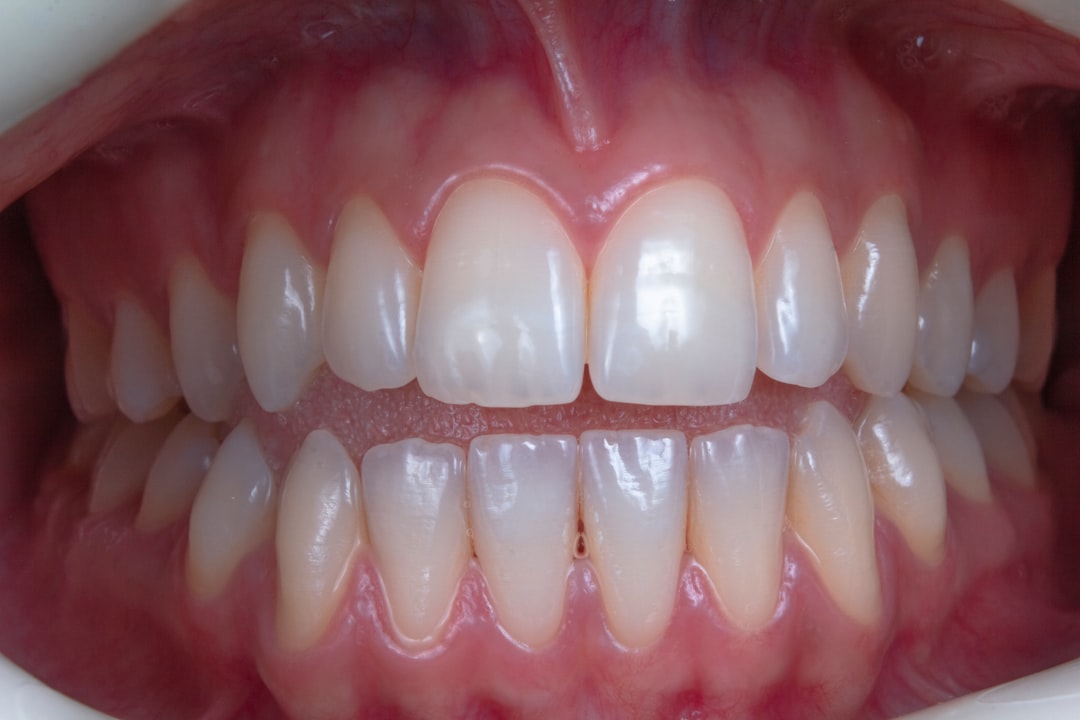
A clear aligner consultation is a decision-making appointment, not a sales pitch. Here’s the typical flow at our Invisalign services page:
- Records and imaging. We take digital scans, photos, and X-rays to understand your bite in three dimensions.
- Discussion of goals. Are you focused on the front six teeth cosmetically, or do you want a full-arch bite correction? Your goals shape the plan.
- Treatment simulation. Software previews the projected end result. This is a plan, not a promise — real biology sometimes moves at its own pace.
- Brand recommendation. Based on complexity, timeline, and cost, we recommend ClearCorrect or Invisalign and explain why.
- Written estimate and next steps. You leave with a plan, an estimate, and time to think it over. No pressure.
Realistic Tradeoffs to Consider
Clear aligners of either brand require discipline. If they aren’t in your mouth 20–22 hours a day, they don’t work as designed. A few honest tradeoffs:
- Compliance is on you. Removable is a feature and a responsibility.
- Attachments are visible up close. Tooth-colored bumps blend well but aren’t invisible.
- Refinements are common. Many cases need a second short series of trays to finalize the result. Plan for this rather than being surprised by it.
- Retainers are forever. Teeth naturally want to drift. Nighttime retainer wear protects your investment long-term.
- Not every case is suitable. Severe skeletal discrepancies, certain implants, or specific tooth shapes can limit aligner effectiveness. Your dentist should say so plainly if that’s you.
For cosmetic-conscious patients considering multiple treatments, aligners often pair with whitening or veneers. A cosmetic dentistry consultation can explain how these fit together and the ideal sequence.
Deciding on Your Next Step
Choosing between ClearCorrect and Invisalign is less about picking a brand and more about finding a provider who evaluates your case honestly and has strong experience with the system they recommend. Dr. Baldwin has practiced in Huntington Beach since 1979, and our office uses digital imaging to plan aligner cases with detail patients can see before starting.
If you’d like a professional opinion on whether clear aligners fit your smile — and which brand is likely the better match — contact our Huntington Beach office to schedule a consultation. You’ll leave with a clear picture of your options, an honest estimate, and no obligation.
Photos by Diana Polekhina, Aurela Redenica, Ozkan Guner on Unsplash.
Frequently asked questions
Is ClearCorrect cheaper than Invisalign?
ClearCorrect’s lab fees are often lower than Invisalign’s, which can translate to a modestly lower patient fee in some practices. However, total treatment cost depends more on case complexity, number of trays, and whether refinements are needed than on the brand itself. Ask for a written estimate at your consultation.
Does ClearCorrect work as well as Invisalign for complex cases?
For mild-to-moderate crowding and spacing, both systems perform comparably. For complex movements — deep bites, significant rotations, or growing teens — Invisalign currently has a broader set of clinical features and a longer track record. Your dentist will recommend based on your specific bite and goals.
Are ClearCorrect and Invisalign trays equally comfortable?
Both use thin, custom-molded plastic and feel similar during wear. Invisalign’s SmartTrack is a single-layer polyurethane; ClearCorrect’s ClearQuartz is a tri-layer polymer designed for sustained force. Most patients adapt within a few days of starting each new tray in the series.
Will insurance cover ClearCorrect the same as Invisalign?
Most dental plans that include orthodontic benefits treat clear aligner brands similarly. The key question is whether your plan covers clear aligners at all and what the lifetime orthodontic maximum is. Bring your benefits summary to your consultation so we can review it with you.
Can I switch from ClearCorrect to Invisalign mid-treatment?
Switching brands mid-treatment isn’t standard practice because each system’s trays are built from its own scan and treatment plan. If a case isn’t progressing as expected, the more common step is a refinement series within the same system rather than a brand change.
How do I know which one is right for me?
You won’t know from online research alone. A consultation with digital scans, X-rays, and a review of your goals is the only reliable way to match a system to your smile. A good provider will explain the reasoning behind their recommendation rather than defaulting to one brand for every patient.
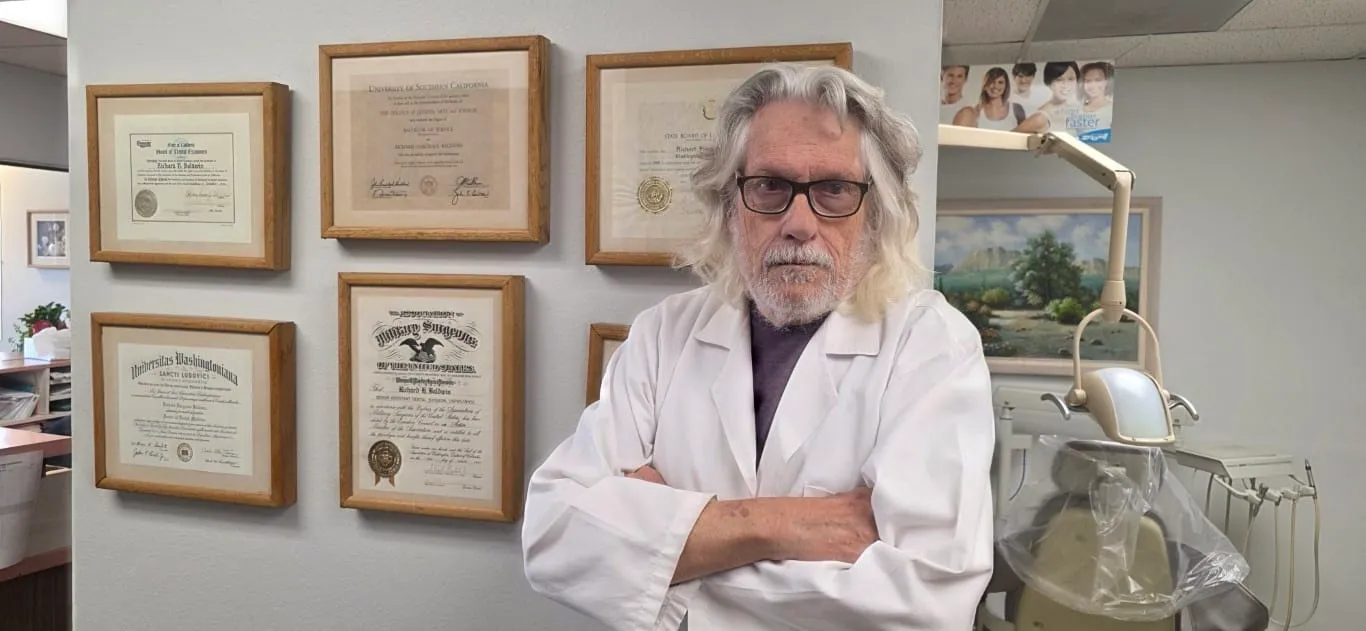
Written and clinically reviewed by Dr. Richard Baldwin, DMD General & cosmetic dentist in Huntington Beach since 1979 · Washington University School of Dental Medicine · Updated
Sources & further reading
- Braces and clear aligners — American Dental Association · MouthHealthy
- Orthodontic treatment for adults and teens — American Association of Orthodontists
- How Invisalign clear aligners work — Align Technology
This guide is general dental information from a practicing dentist, not a diagnosis. Treatment recommendations and costs are confirmed at an in-person exam.