Jump to a section
“My gums bleed when I floss” and “my teeth look longer than they used to” are two of the most common things patients tell me at their first visit. They sound related, and sometimes they are, but bleeding gums and receding gums are usually two different problems with two different fixes.
I am Dr. Richard Baldwin, DMD, and I have been treating gums in Huntington Beach since 1979. Here is how to tell what your gums are telling you.
Bleeding Gums: What It Means
Healthy gum tissue is pale pink, firm, and does not bleed when you brush or floss. Gums that bleed are inflamed, and in the great majority of adults that inflammation is gingivitis — the earliest stage of gum disease — caused by plaque that has been left along the gum line long enough to irritate the tissue.
The good news is that gingivitis is fully reversible. The tissue has not been permanently damaged yet; it is reacting to bacteria and will calm down once the bacteria are removed consistently.
Less common causes of bleeding worth knowing about:
- Starting to floss again after a break. Bleeding for the first week is normal and should stop as the gums heal.
- Pregnancy, puberty and hormonal changes, which make gums more reactive to plaque.
- Blood thinners and some blood-pressure medications.
- Vitamin C or vitamin K deficiency (rare with a normal diet).
- Uncontrolled diabetes, which impairs the gums’ ability to fight infection.
If bleeding continues for more than two weeks of good home care, or if it comes with loose teeth, gums pulling away from the teeth, or persistent bad breath, it may have progressed to periodontitis, where the bone under the gums is being lost. Our gum disease signs guide lists the ten warning signs.
How to Stop Gums From Bleeding
The two-week test I give patients:
- Brush twice a day for two full minutes with a soft brush, angling the bristles into the gum line rather than scrubbing across the teeth.
- Floss once a day, curving the floss into a “C” around each tooth and sliding it gently below the gum line. Water flossers help, but they do not fully replace string floss.
- Rinse with an alcohol-free antibacterial mouthwash if you like; it is optional.
- Book a professional cleaning. Tartar (hardened plaque) cannot be removed at home, and gums will keep bleeding around it no matter how well you brush.
If the bleeding stops within two weeks, you had gingivitis and you have fixed it. If it does not, you need an exam with periodontal measurements, and possibly a deep cleaning (scaling and root planing) to clean below the gum line.
Receding Gums: What It Means
Gum recession is the gum line moving down the tooth, exposing the root. Roots are yellower than enamel and are not protected by it, so receded areas often look darker, feel sensitive to cold, and can develop cavities.
Unlike bleeding, recession is not reversible. Lost gum tissue does not grow back. That makes the cause much more important, because the only way to stop recession is to stop what is causing it. The three causes I see most often:
1. Brushing too hard or with a hard brush. This is the number-one cause in patients with otherwise healthy mouths. The wear pattern is distinctive — recession on the canines and premolars on the side opposite your dominant hand, often with a notch worn into the root.
2. Gum disease. As periodontitis destroys the bone that supports the gum, the gum follows the bone downward. Recession from gum disease is usually more general, affects the back teeth, and comes with bleeding, deep pockets and sometimes bad breath.
3. Grinding and clenching (bruxism). Heavy bite forces flex the tooth at the gum line, and over years the gum and bone give way. Grinders often have recession plus flattened, chipped teeth and morning jaw soreness. A custom night guard is the fix.
Other contributors include tongue or lip piercings, orthodontic movement that pushed a tooth outside the bone, thin gum tissue you were born with, and smoking.
Treating Receding Gums
Treatment depends on the cause and how far it has gone.
- Mild recession with sensitivity: switch to a soft brush and correct technique, use a fluoride or potassium nitrate toothpaste, and we can apply fluoride varnish or a thin layer of bonding over the exposed root to cover it.
- Recession from gum disease: treat the disease first — deep cleaning, then maintenance cleanings every three to four months. Once the infection is controlled, the recession stops progressing.
- Recession from grinding: a lab-made night guard takes the force off the teeth at night.
- Advanced recession (root exposed by several millimeters, or bone visibly thin): I refer you to a periodontist for a gum graft, where tissue from the palate or a donor material is placed over the root. It covers the root, stops sensitivity and protects the tooth long term.
Why the Distinction Matters
Patients sometimes ease off on brushing because their gums bleed, which makes gingivitis worse. Others scrub harder because their teeth “look dirty” near the gum line, which drives recession. Knowing which problem you have tells you which way to adjust.
At HB Dentist in Huntington Beach, every new-patient exam includes periodontal measurements around every tooth, so we can tell you exactly whether your gums are inflamed, receded, or both, and what is driving it. Read more on our gum disease treatment page.
When to Book an Exam
Bleeding that lasts more than two weeks of good home care, any visible recession, new sensitivity to cold along the gum line, or teeth that feel loose are all reasons to be seen. Call (714) 536-2571 or request a visit — gums are one of the few places in dentistry where catching it early genuinely changes the outcome.
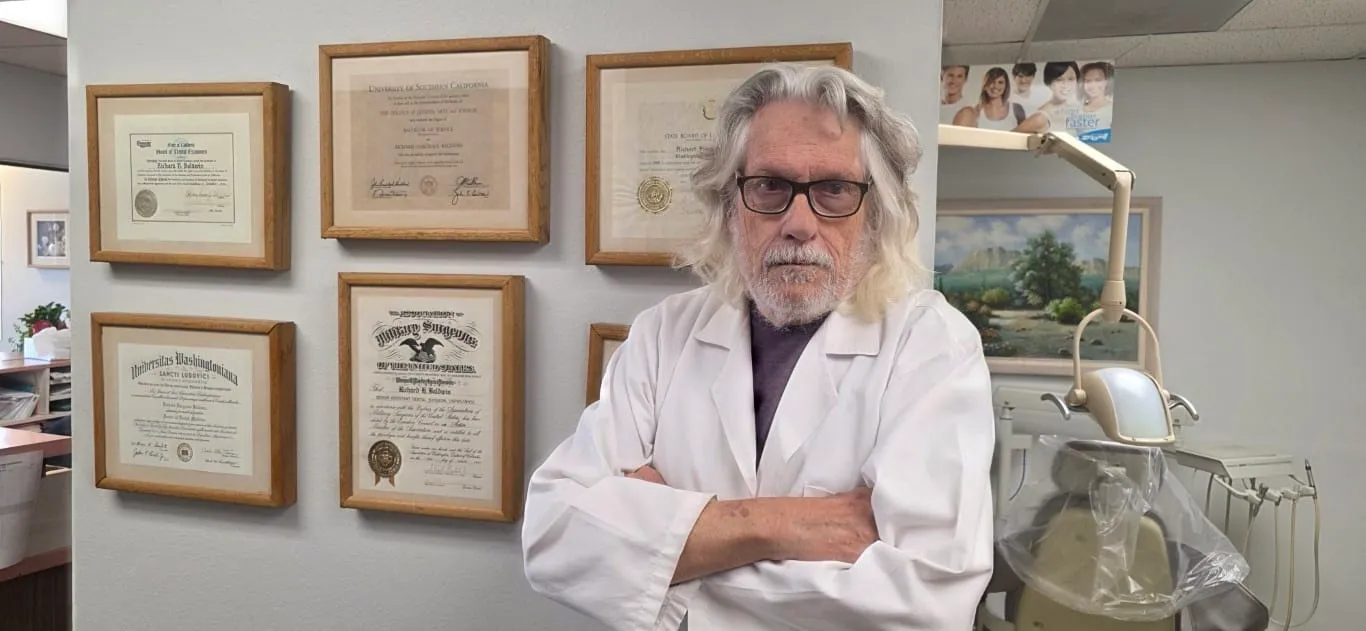
Written and clinically reviewed by Dr. Richard Baldwin, DMD General & cosmetic dentist in Huntington Beach since 1979 · Washington University School of Dental Medicine · Updated
Sources & further reading
- Periodontal (gum) disease — National Institute of Dental and Craniofacial Research (NIH)
- Gum disease — American Dental Association · MouthHealthy
- Periodontal treatments and procedures — American Academy of Periodontology
This guide is general dental information from a practicing dentist, not a diagnosis. Treatment recommendations and costs are confirmed at an in-person exam.