Jump to a section
Tooth pain has a way of arriving at the worst time and then making you wonder: is this a cavity, a sensitive tooth, or something that needs a root canal? After treating Huntington Beach patients since 1979, I can tell you that the symptoms follow a fairly consistent pattern — and that a few of the most alarming ones are less serious than they feel, while a few quiet ones are more serious than they seem.
I am Dr. Richard Baldwin, DMD. Here are the seven signs that most reliably point to a root canal, and three that fool people.
First, What a Root Canal Treats
Inside every tooth is a soft core of nerve and blood vessels called the pulp. A root canal is needed when that pulp becomes irreversibly inflamed or infected — usually from deep decay, a crack, a large old filling, or trauma. The procedure removes the pulp, disinfects the canals, and seals them so the tooth can stay in your mouth. Our root canal: what to expect guide walks through the visit step by step.
The symptoms below are the ways an inflamed or dying pulp announces itself.
7 Warning Signs You May Need a Root Canal
1. Pain that lingers after hot or cold
The most important sign. Healthy or mildly sensitive teeth react to cold and recover within a few seconds. A tooth whose pulp is inflamed keeps aching for 30 seconds to several minutes after the cold is gone. Pain that is triggered by heat — hot coffee, hot soup — and relieved by cold is an even stronger sign that the nerve is dying.
2. Pain when you bite or tap the tooth
Chewing pressure on a tooth with an infected root pushes on inflamed tissue at the root tip. If one tooth hurts when you bite down, or when you tap it with a fingernail and the neighbors do not, that tooth is suspect. Pain on release of biting pressure can also mean a crack, which often ends in a root canal as well.
3. Spontaneous or throbbing pain, especially at night
A tooth that aches on its own, with no trigger, or throbs in time with your pulse, has pressure building inside it. Lying down increases blood flow to the head, which is why this pain classically wakes people at 2 a.m.
4. A pimple on the gum near the tooth
A small, sometimes recurring bump on the gum that may drain a bad-tasting fluid is a sinus tract — the body’s drain for an abscess at the root tip. It often does not hurt, which leads people to ignore it. It is a definite sign of infection that needs a root canal (or extraction) to resolve.
5. A tooth that has darkened
A tooth that turns gray, brown or darker than its neighbors, often months or years after a knock or injury, usually has a dead pulp inside. It may never have hurt. The discoloration is from the breakdown of tissue inside the tooth, and the tooth needs treatment before it becomes infected.
6. Swelling or tenderness of the gum around one tooth
Localized swelling, a tender spot when you press the gum over the root, or a “tall” feeling tooth that hits first when you bite all point to inflammation at the root tip.
7. Sensitivity that has been getting steadily worse
Sensitivity that has crept from occasional to daily, from cold-only to hot-and-cold, or from brief to lingering over weeks is a pulp moving from reversible to irreversible inflammation. Catching it at this stage sometimes means a filling or crown can still save the nerve.
3 Symptoms That Fool People
Brief cold sensitivity on many teeth. Sharp zings from ice water that stop immediately, especially across several teeth, are almost always exposed root surfaces or enamel wear — not a root canal. A sensitivity toothpaste and a softer brush usually fix it. See our receding gums guide if the sensitivity is along the gum line.
Pain that disappeared on its own. This is the dangerous one. A tooth that hurt badly and then went quiet has usually not healed — the nerve has died and stopped sending signals while the infection continues at the root. Patients often show up a year later with an abscess. If a tooth hurt and stopped, have it X-rayed.
Sinus pressure that feels like tooth pain. The roots of the upper back teeth sit right under the sinuses. A cold or sinus infection can make all the upper molars on one side ache at once. A single sore tooth is dental; a whole row that hurts when you bend forward is probably sinus.
How We Confirm It
In the chair, I do three quick things: an X-ray to look for a dark area at the root tip, a cold test (a chilled cotton pellet on each tooth to compare reactions and timing), and a bite test on each cusp. Together they tell us whether the pulp is healthy, reversibly inflamed (a filling or crown may save it), or irreversibly inflamed or dead (root canal). I explain the finding and the fee before anything is scheduled. A root canal at HB Dentist is $900–$1,700 depending on the tooth — details are in our root canal cost guide.
When It Is an Emergency
Call the same day for severe throbbing pain, any facial swelling, a fever with tooth pain, or a bump on the gum that is draining. We hold same-day emergency appointments Monday–Thursday 9–6 and Friday 9–1. Swelling that affects your ability to swallow or breathe is a medical emergency; go to the ER first and call us after.
The Bottom Line
Lingering temperature pain, pain on biting, night pain, a gum pimple, and a darkened tooth are the signs that matter. Short cold zings and pain that vanished on its own are the ones people misjudge. If you are in Huntington Beach and a tooth is worrying you, call (714) 536-2571 — the test takes ten minutes, and the earlier we catch an inflamed nerve, the more options you have.
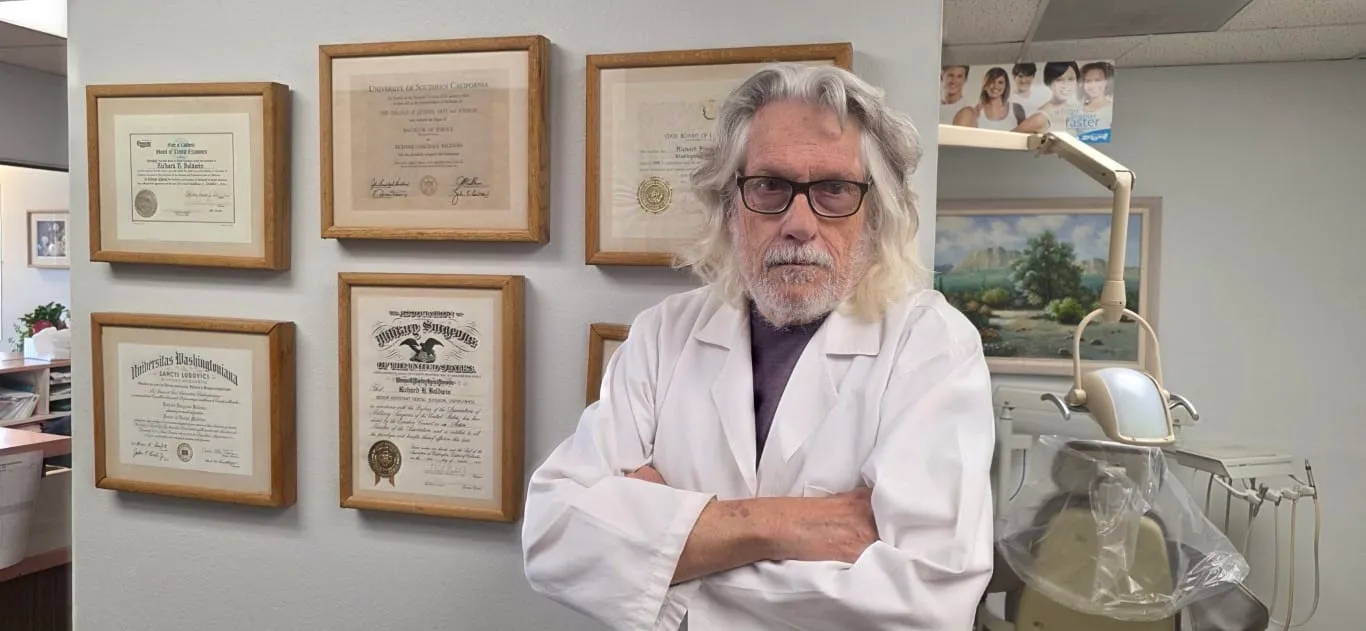
Written and clinically reviewed by Dr. Richard Baldwin, DMD General & cosmetic dentist in Huntington Beach since 1979 · Washington University School of Dental Medicine · Updated
Sources & further reading
- Root canals — American Dental Association · MouthHealthy
- Root canal treatment explained — American Association of Endodontists
This guide is general dental information from a practicing dentist, not a diagnosis. Treatment recommendations and costs are confirmed at an in-person exam.