Jump to a section
- Common Dental Emergencies and First Aid Steps
- Quick-Reference Emergency Table
- If You Need a 24-Hour Emergency Dentist: ER vs. Same-Day Care
- What to Expect When You Reach the Dentist
- How Much Does Emergency Dental Care Cost?
- How to Prevent Dental Emergencies
- Build a Dental Emergency Kit
- Frequently Asked Questions About Dental Emergencies
- Next Step
Searching for a 24-hour emergency dentist right now? See our Emergency Dentist in Huntington Beach page or call (714) 536-2571 for same-day emergency care when the office is available. This guide explains what to do before you reach the dentist.
Dental emergencies are stressful because you have to make decisions while you are in pain, especially if you are searching for a 24-hour emergency dentist after normal business hours. The goal of this guide is simple: help you protect the tooth, reduce risk, and know when to call the dentist versus when to seek emergency medical care first.
If you have severe swelling, trouble breathing or swallowing, uncontrolled bleeding, head trauma, or a suspected jaw fracture, go to the nearest emergency room. For urgent tooth pain, a knocked-out tooth, a broken tooth, a lost crown, or abscess symptoms, call the office or review the emergency dental service page for current hours and next steps.
Common Dental Emergencies and First Aid Steps
Not every dental problem requires immediate treatment, but several situations should be handled the same day. Use the steps below while you call for guidance.
Knocked-Out Tooth
A knocked-out permanent tooth is one of the most time-sensitive dental emergencies. The best chance of saving it is usually within the first 30 to 60 minutes.
What to do right now:
- Pick the tooth up by the crown, which is the white part. Do not touch the root.
- Rinse gently with milk or saline if the tooth is dirty. Do not scrub it.
- Try to place the tooth back into its socket if you can do so safely.
- If that is not possible, store it in cold milk.
- Call the dentist immediately.
If the tooth cannot be saved, Dr. Richard Baldwin, DMD can discuss replacement options such as dental implants.
Cracked or Broken Tooth
Even a small chip can hide a deeper crack. Pain, bleeding, temperature sensitivity, or a sharp edge means the tooth should be evaluated quickly.
What to do right now:
- Rinse gently with warm water.
- Apply gauze to bleeding for 10 minutes.
- Use a cold compress on your cheek for 20 minutes at a time.
- Save any broken tooth pieces in a damp cloth.
- Avoid chewing on that side.
Treatment may include bonding, a crown or bridge, root canal therapy, or extraction if the tooth cannot be restored.
Severe Toothache
A toothache that keeps you awake, does not respond to over-the-counter pain relief, or radiates into your jaw or ear often points to deep decay, infection, or a crack.
What to do right now:
- Rinse with warm salt water.
- Gently floss around the tooth to remove trapped food.
- Take over-the-counter pain relief as directed on the label.
- Do not place aspirin directly on the gum tissue.
- Use a cold compress if there is swelling.
A severe toothache can mean root canal therapy is needed to remove infected tissue and save the tooth.
Lost Filling or Crown
A lost filling or crown may not hurt at first, but the exposed tooth can become sensitive or break further.
What to do right now:
- Keep the crown if you still have it.
- Cover the exposed area with temporary dental cement if needed.
- Do not use household glue.
- Avoid chewing on that side.
- Call for guidance and timing.
Dr. Baldwin will check whether the original restoration can be re-cemented or whether a new crown is needed.
Dental Abscess
An abscess is an infection around the tooth root or gum tissue. It may look like a swollen bump and can cause a bad taste, fever, or facial swelling. It will not resolve on its own.
What to do right now:
- Rinse with warm salt water for temporary relief.
- Do not try to pop or drain the abscess.
- Use pain relief only as directed on the label.
- Call the dentist.
- Go to the ER if swelling spreads quickly or affects breathing or swallowing.
Treatment may involve draining the abscess, medication, root canal therapy, or extraction depending on the source.
Bitten Lip, Tongue, or Cheek
Soft tissue injuries can bleed heavily because the mouth has a strong blood supply. Most minor bites heal, but deep cuts or bleeding that will not stop need help.
What to do right now:
- Clean the area gently with water.
- Apply firm pressure with clean gauze for 15 to 20 minutes.
- Use a cold compress to reduce swelling.
- Seek urgent care if bleeding does not slow with steady pressure.
Quick-Reference Emergency Table
| Emergency | What to Do Immediately | Urgency Level |
|---|---|---|
| Knocked-out tooth | Reinsert or store in milk; call now | Critical - within 30 to 60 minutes |
| Cracked or broken tooth | Rinse, cold compress, save fragments | Urgent - same day |
| Severe toothache | Salt water rinse, floss, cold compress | Urgent - same day |
| Lost filling or crown | Temporary dental cement; avoid chewing | Soon - call for timing |
| Dental abscess | Salt water rinse; call now | Critical - ER if swelling spreads |
| Bitten lip or tongue | Firm pressure, cold compress | Same day if bleeding persists |
| Object stuck between teeth | Gentle flossing only | Call if floss does not work |
If You Need a 24-Hour Emergency Dentist: ER vs. Same-Day Care
Many people search for a 24-hour emergency dentist because they are in pain at night, on a weekend, or before they know whether the problem is medically dangerous. The first decision is not simply “dentist or no dentist.” It is whether you need hospital emergency care now or dental triage and the soonest available appointment.
Dr. Baldwin’s Huntington Beach office offers same-day emergency appointments when available. If your symptoms point to a dental problem but not a medical emergency, call the office, leave clear details, and follow the first-aid steps in this guide while you wait for instructions. If symptoms involve breathing, swallowing, uncontrolled bleeding, spreading swelling, major trauma, or possible jaw fracture, go to the ER first.
Go now or call immediately:
- A permanent tooth is knocked out or displaced
- Bleeding does not slow with firm pressure
- Severe pain does not respond to over-the-counter medication
- Visible swelling appears in the face, jaw, or neck
- Abscess symptoms appear with fever, foul taste, or difficulty swallowing
- A broken tooth exposes the nerve or cuts the cheek or tongue
Usually stable enough to call for the next available guidance:
- Small chip with no pain
- Lost filling with mild sensitivity
- Loose crown you can temporarily re-seat
- Minor gum irritation
When in doubt, call. The team can help you decide whether you need a dental visit, urgent care, or emergency medical care.
What to Expect When You Reach the Dentist
Step 1 - Phone triage. The team asks what happened, when symptoms started, and whether there is swelling, bleeding, trauma, or a knocked-out tooth.
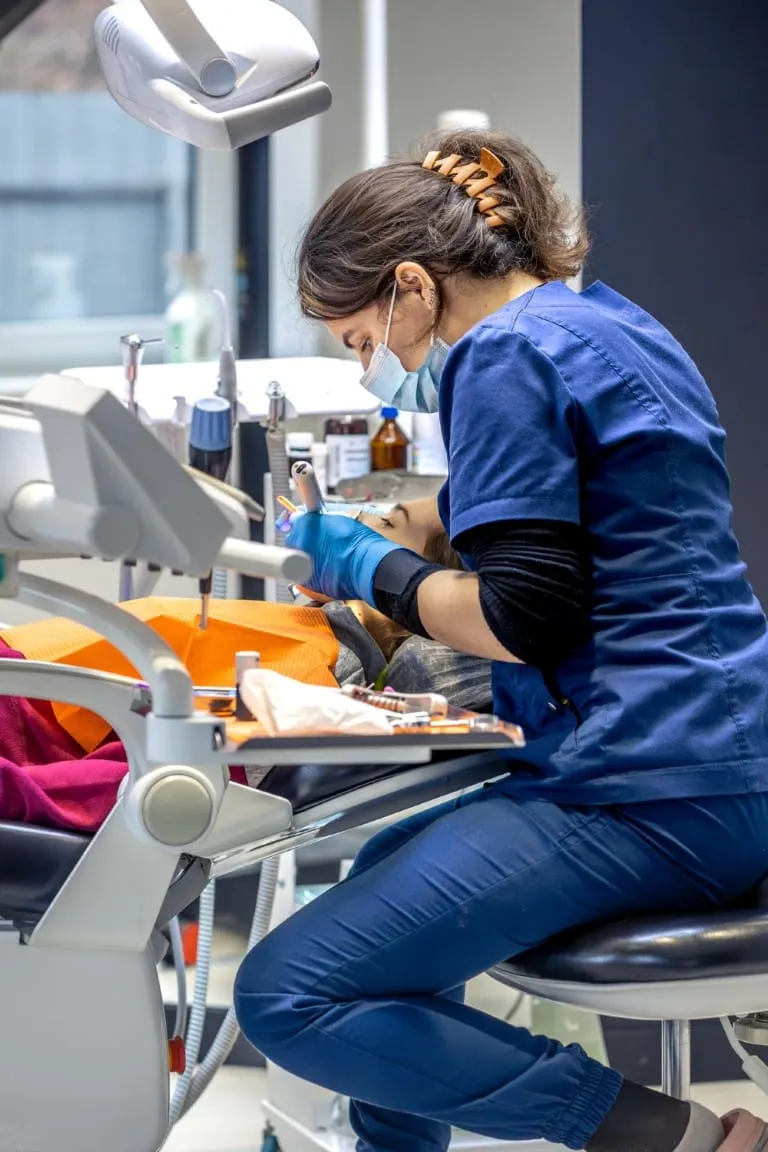
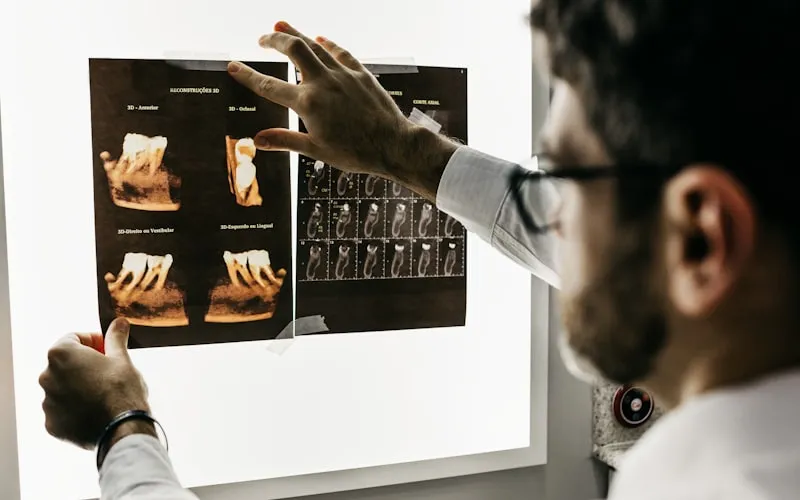
Step 2 - Emergency assessment. Dr. Baldwin checks the area and may take a digital X-ray to see whether the problem involves the tooth, root, bone, gum tissue, or bite.
Step 3 - Pain relief and stabilization. The first goal is to get you comfortable and reduce immediate risk. That may mean smoothing a sharp edge, placing a temporary restoration, draining an abscess, or starting tooth-saving treatment.
Step 4 - Clear next steps. Once the urgent issue is controlled, Dr. Baldwin explains what happened, what treatment is recommended, and what can wait.
How Much Does Emergency Dental Care Cost?
Emergency dental costs depend on the exam, X-rays, diagnosis, and treatment needed. A lost crown, abscess, broken tooth, and severe toothache can all require different levels of care.
Before treatment begins, Dr. Baldwin explains the recommended next step and the estimated cost. Bring your dental insurance card if you have one so the office can help verify benefits.
How to Prevent Dental Emergencies
You cannot prevent every accident, but you can lower the risk.
- Wear a mouthguard. A custom mouthguard protects better than a store-bought guard for contact sports and high-impact activities.
- Stop chewing ice, hard candy, and popcorn kernels. These commonly crack molars and restorations.
- Do not use your teeth as tools. Opening packages or tearing tape can fracture enamel.
- Keep up with checkups. Small cracks and decay are easier to treat before they become urgent.
- Address grinding. A custom night guard can reduce the force that causes cracked teeth and sore jaws.
Build a Dental Emergency Kit
It takes a few minutes to prepare, and it can save time when something happens.
- Sterile gauze pads
- Small container with a lid
- Ibuprofen or another pain reliever your physician says is safe for you
- Temporary dental cement from a pharmacy
- Cold pack
- HB Dentist phone number saved in your phone
Frequently Asked Questions About Dental Emergencies
What should I do if I have a broken tooth in Huntington Beach?
Rinse gently with warm water, apply gauze to bleeding, and use a cold compress. Save any tooth fragments and avoid chewing on that side. Then call the office or visit the emergency dentist in Huntington Beach page for same-day instructions.
How can I get toothache relief fast?
Rinse with warm salt water, gently floss around the tooth, take pain relief only as directed on the label, and apply a cold compress outside the face if there is swelling. These steps manage symptoms but do not treat the cause.
When should I go to the ER instead of the dentist?
Go to the ER for trouble breathing or swallowing, rapidly spreading facial swelling, uncontrolled bleeding, head trauma, or suspected jaw fracture. Dental infections can become medical emergencies when swelling spreads.
Next Step
If you are dealing with urgent dental pain, trauma, swelling, a lost crown, or a knocked-out tooth, call our Huntington Beach emergency dentist for same-day triage instructions or call (714) 536-2571.
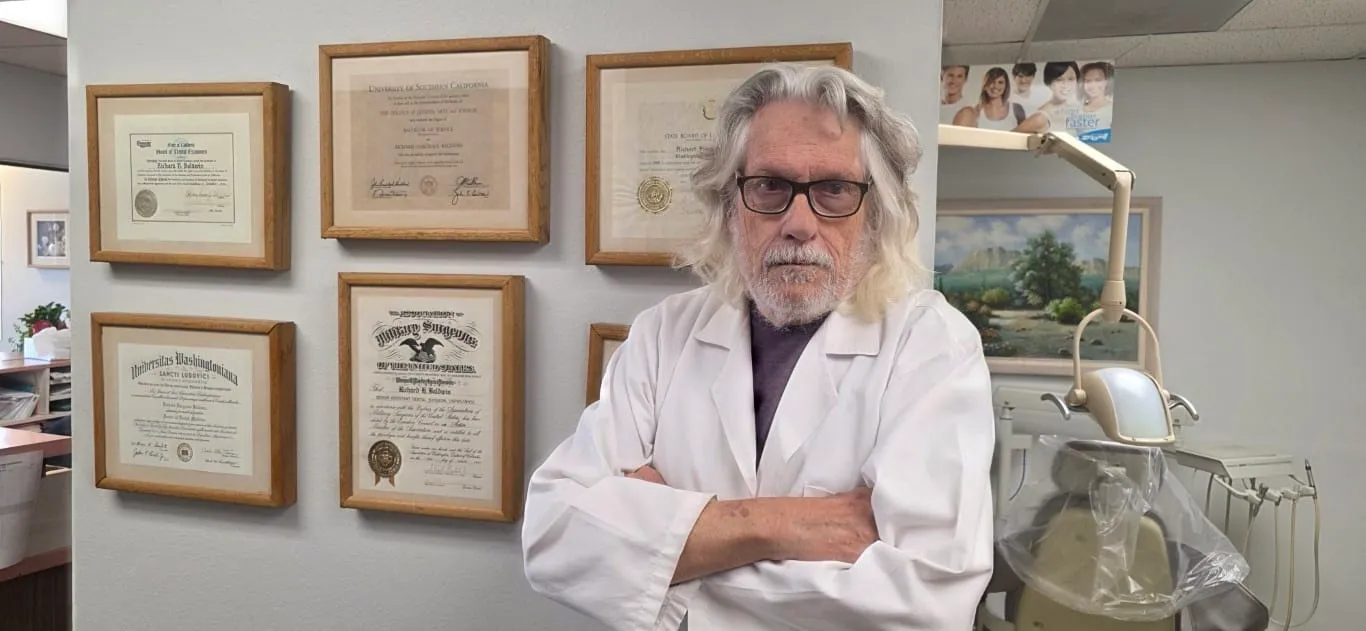
Written and clinically reviewed by Dr. Richard Baldwin, DMD General & cosmetic dentist in Huntington Beach since 1979 · Washington University School of Dental Medicine · Updated
Sources & further reading
- Dental emergencies — American Dental Association · MouthHealthy
- Tooth pain and root canal symptoms — American Association of Endodontists
This guide is general dental information from a practicing dentist, not a diagnosis. Treatment recommendations and costs are confirmed at an in-person exam.