Jump to a section
An Honest Answer First: We Do Not Offer Sedation
If you came here looking for nitrous oxide, oral sedation, or IV sedation, here is the straight answer: our office does not provide sedation of any kind. We would rather tell you that plainly than have you book an appointment expecting something we cannot deliver.
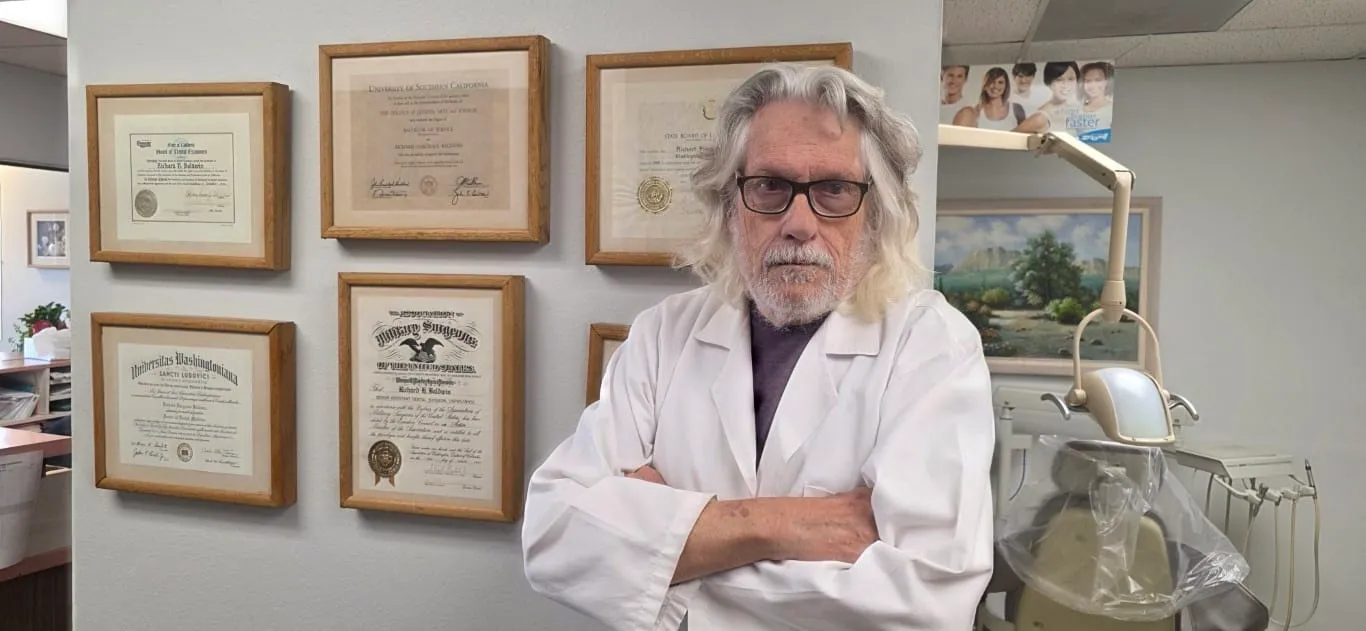
What we do offer is something a lot of anxious patients have found works better than they expected — careful, unhurried dentistry from a dentist who has been treating nervous patients in Huntington Beach since 1979. If that is not enough for your situation, we will tell you honestly and help you find a practice that can sedate you.
The Thing Most People Get Backwards About Pain
This trips up almost every anxious patient, so it is worth being clear about.
Sedation does not stop pain. Local anesthesia does.
Local anesthesia blocks the nerve signal at the tooth and the tissue around it. That is the thing standing between you and discomfort during a filling, a crown, or a root canal. Sedation is different — it changes how relaxed or aware you feel while the anesthesia does its job.
So when someone says “I need to be knocked out for this,” what they usually mean is “I am frightened.” That is a real and reasonable feeling. But the fix for pain is proper numbing, and we take our time getting that right before we start anything.
What We Actually Do for Nervous Patients
None of this is complicated. It just requires a dentist who is willing to slow down.
We explain before we do. No surprises, no instruments appearing without warning. You will know what is about to happen and roughly how long it will take. A large part of dental fear is the fear of the unknown, and that one is easy to remove.
You can stop us at any time. We agree on a hand signal at the start. Raise your hand and we stop — not at a convenient moment, immediately. Knowing you have that control changes the entire experience, and most patients who have it never need to use it.
We do not rush the numbing. Rushed anesthetic is the single most common reason a patient feels something they should not have. We wait until the area is genuinely numb, and we check with you before proceeding. If you still feel a twinge, we add more. That is normal and it is not an imposition.
We break long treatment into shorter visits. If sitting in the chair is the hard part, we can split treatment across appointments rather than doing everything in one long session.
Nobody is going to lecture you. If you have avoided the dentist for five years, or fifteen, we have seen it before. Shame is not a treatment technique. We start from where you are.
When You Genuinely Need Sedation
Sometimes comfort measures are not enough, and it is important to be honest about that too. You may be a better fit for a sedation practice if:
- You have a severe dental phobia that has kept you away from care for years, and the thought of an appointment causes real panic
- You have a strong gag reflex that makes routine treatment very difficult
- You need extensive surgical work in a single session
- You have a medical or sensory condition that makes staying still for treatment genuinely hard
In those cases, tell us at your consultation. We will refer you to a practice that offers sedation rather than push you into an appointment that will not go well. Getting you treated somewhere is better than getting you frightened here.
Note that dental implant placement is handled by the oral surgeon we partner with, and anesthesia during that stage is managed by their office — worth asking them directly if it concerns you.
What This Means for Common Procedures
Fillings and crowns. Local anesthesia only. Most patients are surprised how unremarkable these are once they are properly numb.
Root canals. The reputation is much worse than the reality. A root canal relieves the pain of an infected tooth. With good local anesthesia the procedure itself is comparable to having a filling done, just longer. You can drive yourself home afterward.
Extractions. Done under local anesthesia. We will talk through exactly what you will feel — pressure, yes; sharp pain, no.
Cleanings. If you have sensitive teeth or tender gums, say so before we start. There is a great deal we can adjust.
The Real Point
Fear of the dentist usually is not really about pain. It is about not being in control, not knowing what is happening, and worrying that someone will make you feel foolish for being afraid.
We cannot sedate that away, and we would not want to. What we can do is tell you what is happening, let you stop whenever you need to, take the time to get you properly numb, and treat you like an adult who is allowed to be nervous.
If you have been putting off dental care, call us at (714) 536-2571 and say plainly that you are anxious. It is a normal thing to tell a dentist, and it changes how we plan your visit.
Related reading: how we help nervous patients and questions worth asking your dentist.
