Jump to a section
You know you grind your teeth — maybe your jaw aches in the morning, maybe your partner hears it, maybe I pointed out the flat, chipped edges at your last check-up. Now you are standing in the pharmacy aisle holding a $30 boil-and-bite guard, wondering whether the dentist version is worth ten to thirty times as much.
I am Dr. Richard Baldwin, DMD, and I have fitted night guards for Huntington Beach patients since 1979. This is the honest comparison, including the situations where the drugstore guard is the right call.
The Two Kinds of Night Guard
Drugstore (boil-and-bite) guards are a horseshoe of thermoplastic that you soften in hot water and bite into. They cost $20–$60, are typically 3–4 mm thick, and are one-size-fits-most. There are also “one size” guards that are not molded at all, which I do not recommend for anything but a night or two.
Custom (lab-made) guards are fabricated by a dental lab from a digital scan or impression of your teeth. They are usually hard acrylic or a hard-outside, soft-inside laminate, 1–2 mm thick, and adjusted by the dentist so your bite is even across the guard. At HB Dentist a custom night guard is currently $299 with our special offer.
Head-to-Head Comparison
| Drugstore boil-and-bite | Custom lab-made | |
|---|---|---|
| Cost | $20–$60 | $299 (current special) |
| Fit | Approximate; loosens over time | Exact, from a 3D scan |
| Thickness | 3–4 mm (bulky) | 1–2 mm |
| Bite adjustment | None | Adjusted by the dentist so teeth meet evenly |
| Comfort / compliance | Many patients quit within weeks | Most wear it nightly for years |
| Protection for heavy grinders | Wears through in months; can distort | Hard acrylic resists years of grinding |
| Lifespan | 3–5 months | 3–5 years |
| Effect on jaw joint | Can strain it if bulky or uneven | Designed to unload it |
| Insurance | Not covered | Often partly covered when damage is documented |
| Cost per year of use | $60–$150 | $80–$300 |
That last row surprises people. Because custom guards last so much longer, the cost per year is closer than the sticker price suggests.
Why Fit Matters More Than Thickness
A night guard works by giving your teeth a smooth, sacrificial surface to grind against and by spreading the force evenly so no single tooth or the jaw joint takes the load. A guard that rocks, pinches, or contacts only a few back teeth does the opposite: it concentrates force and can make jaw soreness worse.
Custom guards are adjusted at the delivery visit. I mark the contacts with articulating paper and polish the guard until every tooth touches it evenly. Nothing like that is possible with a boil-and-bite guard — whatever shape your teeth made in the softened plastic is what you get.
Thickness matters for a different reason: comfort. A 1 mm guard disappears in your mouth within a few nights; a 4 mm guard changes how your lips close and how you breathe, and that is why so many end up in the nightstand drawer.
When a Drugstore Guard Is the Right Choice
I am not against them. A boil-and-bite guard is a reasonable buy when:
- You are not sure you grind and want to test whether a guard reduces morning jaw pain before spending more.
- You are waiting the two weeks for your custom guard to come back from the lab.
- You want a spare for travel.
- You need short-term protection during a stressful few weeks and do not grind otherwise.
Replace it as soon as it shows wear-through, cracks, or stops fitting snugly.
When You Need a Custom Guard
Go custom if any of these apply:
- Visible wear — flattened biting edges, chipped enamel, or notches at the gum line. That damage is permanent and gets expensive to repair with crowns or bonding.
- Morning headaches, jaw soreness or clicking, which point to TMJ strain and need a properly balanced guard.
- Receding gums on the teeth you grind against — see our receding gums guide.
- You have crowns, veneers, or implants. A $299 guard can help protect dental work from grinding damage.
- You tried a drugstore guard and stopped wearing it. Compliance is everything; a guard in a drawer protects nothing.
What Getting a Custom Guard Involves
Two short visits. At the first, we take a digital scan of both arches (no goopy impressions) and note where your teeth show wear. About two weeks later, the guard comes back from the lab; I fit it, adjust the bite, and show you how to clean it. Bring it to your regular cleanings so I can check the wear pattern and polish it. Our night guards and TMJ page explains the options, including softer guards for clenchers and splints for jaw pain. For a broader look at bruxism itself, read night guards for teeth grinding.
The Bottom Line
Buy the drugstore guard to find out whether you need one. Buy the custom guard once you know you do. If you are in Huntington Beach and unsure which camp you are in, call (714) 536-2571 — a five-minute look at your tooth edges usually answers the question.
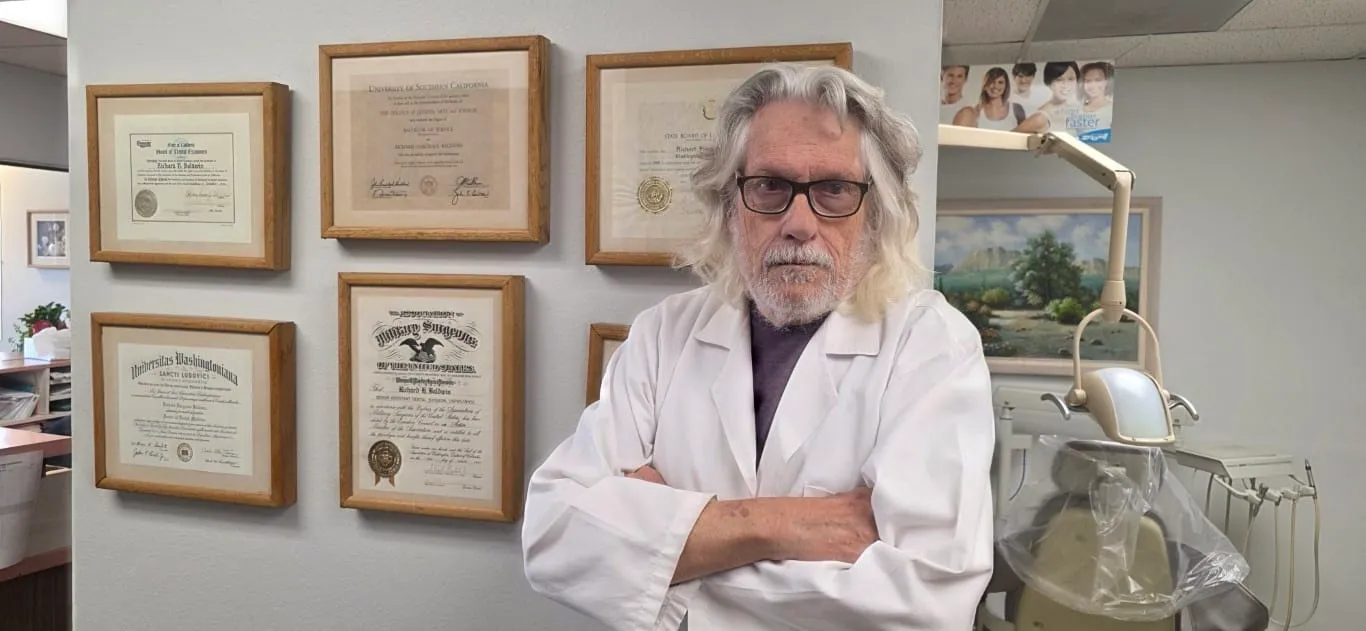
Written and clinically reviewed by Dr. Richard Baldwin, DMD General & cosmetic dentist in Huntington Beach since 1979 · Washington University School of Dental Medicine · Updated
Sources & further reading
- TMJ disorders (TMD) — National Institute of Dental and Craniofacial Research (NIH)
- TMJ — American Dental Association · MouthHealthy
- Mouthguards — American Dental Association · MouthHealthy
This guide is general dental information from a practicing dentist, not a diagnosis. Treatment recommendations and costs are confirmed at an in-person exam.