Jump to a section
- What Makes a Dental Implant “Titanium”
- Why Titanium Is the Gold Standard: Osseointegration Explained
- Medical-Grade Titanium: Understanding Grade 4 and Grade 5
- Titanium vs Zirconia Implants: A Fair Comparison
- Are Titanium Dental Implants Safe? What the Research Shows
- What to Expect When You Choose Titanium at HB Dentist
- Frequently Asked Questions
When you invest in a dental implant, the metal beneath your new tooth matters as much as the crown you see in the mirror. Titanium dental implants have quietly become the standard of care in modern dentistry, and at HB Dentist in Huntington Beach, every implant we place uses medical-grade titanium sourced from ISO-certified manufacturers. This guide explains what medical-grade really means, why titanium bonds with living bone the way no other material does, and how to weigh titanium against newer alternatives like zirconia.
What Makes a Dental Implant “Titanium”
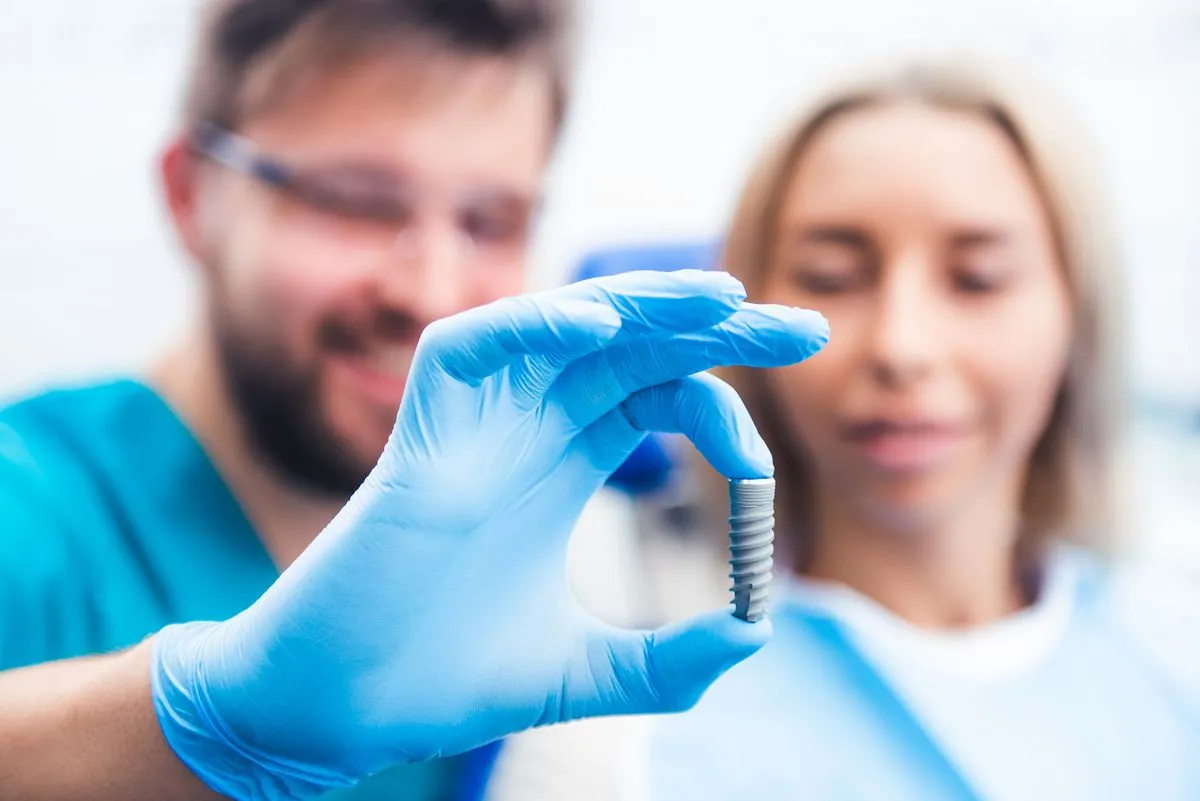
A dental implant is a small threaded post surgically placed in your jaw to act as an artificial tooth root. When we say the implant is titanium, we mean the post itself — the part that lives inside your bone — is machined from either commercially pure titanium (CP-Ti) or a titanium alloy. The visible crown, the small connector called the abutment, and the surgical hardware are separate components.
Titanium became the standard for a reason. It has a decades-long track record in the human body: hip replacements, spine screws, cardiac pacemaker cases, and cranial plates all rely on the same base metal. When Swedish researcher Per-Ingvar Brånemark accidentally discovered in the 1950s that titanium fused permanently to bone in rabbit tibia, he laid the groundwork for the entire modern field of implant dentistry.
If you are still comparing options, our overview of dental implants in Huntington Beach covers the full procedure from consultation to healed crown.
Why Titanium Is the Gold Standard: Osseointegration Explained
Osseointegration — the direct structural and functional connection between living bone and the surface of a load-bearing implant — is the reason titanium wins. Once placed, a titanium post attracts a microscopic layer of oxide that living bone cells treat as friendly territory. Over roughly three to six months, new bone grows directly onto the implant surface, locking it in place with a bond that can withstand hundreds of pounds of chewing force.
No other implantable material has produced the same level of long-term evidence. Peer-reviewed reviews consistently place titanium implant survival rates above 95% at ten years, and many of Dr. Baldwin’s earliest implant patients from the 1980s are still chewing on the same posts today.
This is also why titanium is the material of choice for full-arch cases and single-tooth replacements alike. If you are weighing your options against removable prosthetics, our comparison of dental implants vs dentures walks through the day-to-day differences that osseointegration makes possible.
Medical-Grade Titanium: Understanding Grade 4 and Grade 5
Not all titanium is the same. Manufacturing standards classify titanium into grades based on purity and alloy composition, and only two are used in titanium dental implants:
- Grade 4 (commercially pure titanium): At least 99.5% pure titanium, prized for its natural biocompatibility and its uncoated surface’s affinity for bone. Grade 4 is often chosen for single-tooth implants in patients with healthy bone volume.
- Grade 5 (Ti-6Al-4V titanium alloy): Titanium blended with about 6% aluminum and 4% vanadium. The alloy is stronger and slightly more flexible under load, which suits All-on-4 style full-arch bridges and angled placements where the implant must resist significant lateral force.
Both grades are considered medical-grade and are governed by international standards such as ASTM F67 (for Grade 4) and ASTM F136 (for Grade 5). At HB Dentist, we work only with implant systems whose manufacturers publish full metallurgical certificates for every batch. That traceability is one of the practical differences between a premium implant and a discount overseas alternative — and it is what allows us to stand behind our restorations for the long haul.
Titanium vs Zirconia Implants: A Fair Comparison
Zirconia is the newest material in the implant conversation, and for a specific set of patients it is a legitimate alternative. Zirconia implants are ceramic, tooth-colored, and completely metal-free — attractive features for patients with thin gum tissue, documented metal sensitivity, or a strong preference against implanted metal.
Where titanium still leads:
- Clinical track record. Fifty-plus years of peer-reviewed data versus roughly twenty years for zirconia.
- Two-piece design. Titanium implants use a separate abutment, which allows angulation corrections and easier crown replacement. Most zirconia implants are one-piece, limiting the dentist’s ability to compensate for less-than-ideal placement angles.
- Flexibility under load. Titanium’s slight give absorbs chewing forces; zirconia is more rigid and, in some studies, more prone to microfractures.
Where zirconia can win: front-tooth cases where a slim gum line would show a dark titanium shadow, or patients with a confirmed titanium allergy. For most posterior implants and full-arch reconstructions, titanium remains the material with the strongest evidence. Our patient education library has additional material comparisons if you want to go deeper.
Are Titanium Dental Implants Safe? What the Research Shows
Titanium’s safety record in the human body is extraordinary. The U.S. Food and Drug Administration regulates dental implants as Class II medical devices and requires manufacturers to prove biocompatibility before market approval. True titanium allergy is documented in under 1% of implant recipients, and for patients with a known history of metal sensitivity, MELISA blood testing and dermatologic patch testing are available before surgery.
The larger safety story is about what titanium prevents. Missing teeth trigger progressive jawbone loss — the ridge that once held the tooth simply melts away over years. Titanium implants transfer chewing force back into the bone the way a natural root would, halting that resorption and preserving the shape of your face decades.
Recovery is another common concern. Most patients describe implant surgery pain as milder than a tooth extraction, and we cover the full experience in our companion post on what dental implant surgery actually feels like.
What to Expect When You Choose Titanium at HB Dentist
Every implant case at our Huntington Beach practice begins with 3D cone-beam imaging so we can see your bone volume, nerve position, and sinus anatomy before a single millimeter of surgery is planned. From there, Dr. Baldwin works with the oral surgeon to specify the titanium grade, diameter, and length that fits your case — a decision informed by decades of restoring implants for Orange County patients.
We use only implant systems from manufacturers who publish material certificates, and every restoration is designed and milled in the U.S. That matters when it comes time to service a crown ten or fifteen years down the road: parts availability and manufacturer support are what keep an implant restoration functional for life.
If you are still weighing local providers, our sibling guide on choosing a local implant dentist walks through the questions to ask before you commit.
Frequently Asked Questions
Are titanium dental implants safe?
Yes. Titanium has been used in medical and dental implants for more than 50 years and is classified by the FDA as biocompatible. True titanium allergy is documented in under 1% of implant recipients, and independent reviews consistently show titanium implants have the highest long-term survival rates of any tooth replacement option.
What is the difference between Grade 4 and Grade 5 titanium implants?
Grade 4 is commercially pure titanium, prized for its natural biocompatibility and bone-bonding surface. Grade 5, or Ti-6Al-4V, is a titanium alloy with aluminum and vanadium added for greater tensile strength. Most premium implant systems use one grade or the other depending on the load the implant needs to carry.
Do titanium implants cause metal allergies?
Genuine titanium allergy is extremely rare — documented in less than 1% of implant patients. Patch testing before surgery is available for anyone with a known history of metal sensitivity, and zirconia is a proven alternative when titanium is not appropriate.
How long do titanium dental implants last?
The titanium post itself is designed to last a lifetime, and long-term studies show survival rates above 95% after ten years. The visible crown attached to the implant typically lasts 15 to 20 years before it may need to be refreshed.
Are zirconia implants better than titanium?
Neither is universally better — they solve different problems. Titanium offers unmatched strength, flexibility for angled placements, and decades of clinical evidence. Zirconia is metal-free and tooth-colored, which suits patients with visible gum lines or documented metal sensitivity. Dr. Baldwin will recommend the material best suited to your case.
Considering titanium dental implants in Huntington Beach? Schedule a consultation with Dr. Baldwin to review your bone health, discuss material options, and get a straightforward plan for your restoration.
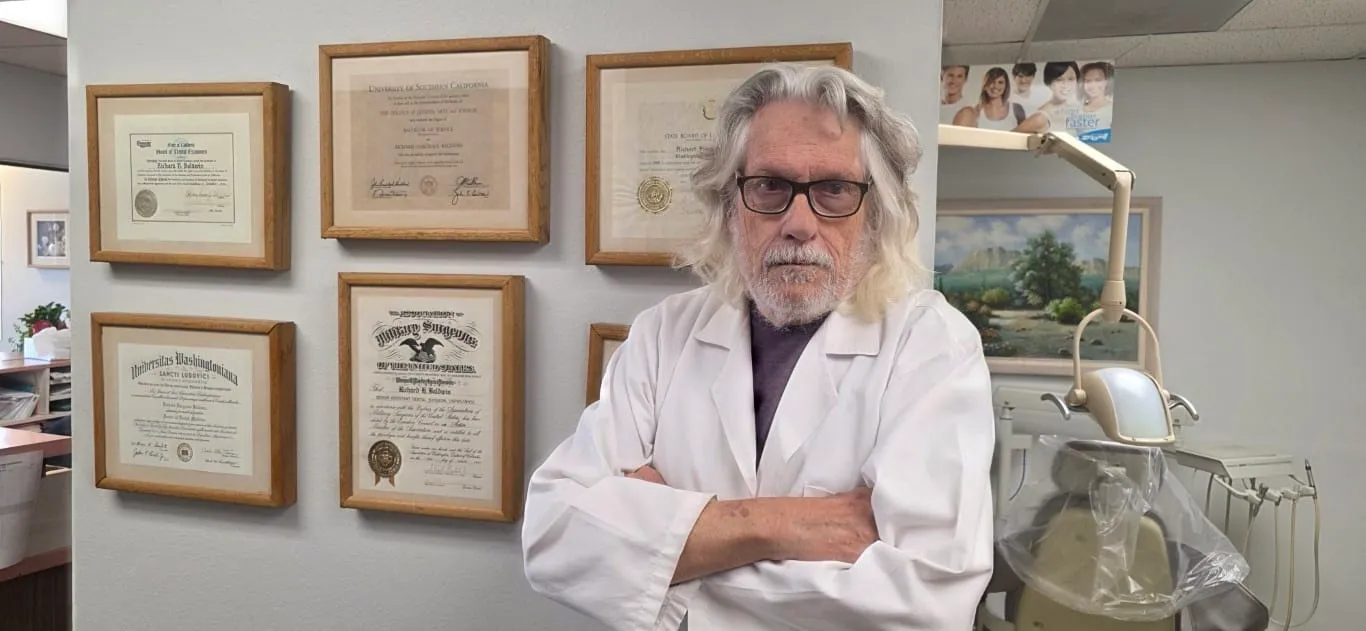
Written and clinically reviewed by Dr. Richard Baldwin, DMD General & cosmetic dentist in Huntington Beach since 1979 · Washington University School of Dental Medicine · Updated
Sources & further reading
- Dental implants — American Dental Association · MouthHealthy
- Dental implant surgery — American Association of Oral and Maxillofacial Surgeons
- Gum disease and implant health — American Academy of Periodontology
This guide is general dental information from a practicing dentist, not a diagnosis. Treatment recommendations and costs are confirmed at an in-person exam.