Jump to a section
- The Question Every Patient Asks Before Buying a Kit
- What Is Actually Inside an At-Home Whitening Kit
- Are At-Home Whitening Teeth Kits Safe? The Short Answer
- The Real Risks Worth Knowing About
- How to Pick a Safer At-Home Whitening Kit
- Custom Take-Home Trays: The Middle Ground
- Signs You Should Stop Whitening Immediately
- When Professional Whitening Is the Right Call
- Frequently Asked Questions
- Talk to a Huntington Beach Dentist Before You Whiten
The Question Every Patient Asks Before Buying a Kit
Every week someone sits in my Huntington Beach chair holding their phone, showing me a whitening kit they saw on Instagram, and asking the same question: are at home whitening teeth kits safe? The honest answer is nuanced. Most FDA-recognized kits are safe for healthy teeth when used exactly as directed. But “as directed” is doing a lot of work in that sentence — and it is where most patients get into trouble.
I have practiced dentistry for decades, and I have watched at-home whitening evolve from grocery-store novelty into a real category. Some kits are genuinely useful. Others cause preventable damage that lands people back in the dental chair for sensitivity treatment or bonding repair. This guide walks through what is actually inside these kits, the real risks, and how to shop for one that will not compromise your enamel.
What Is Actually Inside an At-Home Whitening Kit
Almost every over-the-counter whitening product on the market uses one of two active ingredients: hydrogen peroxide or carbamide peroxide. Both work the same way — they break apart the molecular chains of stain compounds trapped inside the tooth. The difference is speed. Hydrogen peroxide acts faster; carbamide peroxide releases slowly over hours and tends to be gentler.
Common formats include:
- Whitening strips — thin plastic strips coated with peroxide gel. Typically 6 to 10 percent hydrogen peroxide.
- Boil-and-bite tray kits — a semi-custom tray you shape at home, plus a syringe of gel.
- LED-light kits — a mouthpiece with a small blue light. The light itself contributes very little; the gel does the work.
- Paint-on gels and pens — for spot touch-ups. Low concentration, low risk, modest results.
- Whitening toothpaste and mouthwash — mostly surface stain removers, not true internal whitening.
Kits sold in U.S. retail generally cap out around 10 percent carbamide peroxide or 6 percent hydrogen peroxide. Anything meaningfully stronger belongs in a dentist’s office.
Are At-Home Whitening Teeth Kits Safe? The Short Answer
For patients with healthy enamel, no untreated cavities, no visible cracks, and no active gum disease — yes, at-home whitening teeth kits are safe when used as directed. Peer-reviewed research reviewed by the American Dental Association has consistently found that peroxide at OTC concentrations does not permanently damage healthy enamel.
The problem is that a lot of people are not in that “healthy baseline” group and do not realize it. Fine cracks, early gum recession, and thinning enamel are common in adults over 30 and often invisible to the person looking in the mirror. That is why a five-minute pre-screen with a dentist is worth so much more than the sticker price suggests.
The Real Risks Worth Knowing About
Most complications from at-home kits fall into four buckets.
1. Sensitivity That Lingers Longer Than It Should
Temporary cold or air sensitivity in the 24 to 72 hours after whitening is normal. Sharp, lingering pain that lasts a week is not. It usually means the peroxide reached the dentin through eroded enamel or micro-cracks. Our patient guide on is teeth whitening safe for sensitive enamel walks through how to tell the difference and what to do next.
2. Gum Irritation and Chemical Burns
Ill-fitting trays and overfilled strips push gel onto the gum line. Peroxide will turn gum tissue white and cause a stinging burn that can take days to heal. This is the single most common complication I treat from DIY kits.
3. Uneven Whitening Around Restorations
Whitening gel does not lighten crowns, veneers, bonding, or tooth-colored fillings. If you have any of these on visible teeth, an at-home kit will whiten the natural enamel around them and leave the restorations looking dark by comparison. Fixing that mismatch means replacing restorations — a much bigger investment than the original whitening.
4. Over-Whitening and Enamel Dehydration
Using strips or gel past the recommended cycle temporarily dehydrates enamel and can create a chalky, translucent-edge appearance. It usually reverses within a few weeks, but repeated over-use trains patients to see fully rehydrated teeth as “yellow” and reach for more product.
How to Pick a Safer At-Home Whitening Kit
If you have decided to try an over-the-counter option, use this short checklist before you buy.
- Peroxide concentration is disclosed on the label. Kits that hide the number are hiding something.
- ADA Seal of Acceptance or clear clinical backing. The seal is not the only signal of safety, but it is a strong one.
- Fit matters more than shine. A well-molded tray or a properly sized strip keeps gel on enamel and off gum tissue.
- Session times of 15 to 45 minutes, not “overnight” for high-strength kits.
- Purchased from a legitimate U.S. retailer. Marketplace sellers frequently list expired or counterfeit gel.
If you are still comparing what a supervised in-office session includes versus a home kit, our breakdown of Zoom vs take-home whitening in Huntington Beach covers the differences in speed, concentration, and monitoring.
Custom Take-Home Trays: The Middle Ground
Between drugstore strips and a full in-office appointment sits a third option that most patients do not know exists: dentist-supervised custom take-home trays. We take an impression, fabricate a tray that fits your bite precisely, and dispense a professional-grade gel — usually 10 to 16 percent carbamide peroxide.
Because the tray fits, gel does not migrate onto the gums. Because the gel is prescribed at a calibrated concentration, results are predictable. And because Dr. Baldwin evaluates your enamel first, you know before you start whether you are a good candidate. The cost sits between a drugstore kit and an in-office Zoom session — and we lay out the exact numbers in our guide to teeth whitening cost in Huntington Beach for 2026.
Signs You Should Stop Whitening Immediately
Discontinue any at-home kit and call your dentist if you notice any of the following:
- Sharp pain that persists more than 48 hours after the last session
- White patches or bleeding at the gum line
- Visible hairline lines or dark spots emerging on a tooth
- A restoration that suddenly feels rough or looks separated from the tooth
Any of these can point to a problem the whitening gel exposed rather than caused. Treating them early is inexpensive; ignoring them is not.
When Professional Whitening Is the Right Call
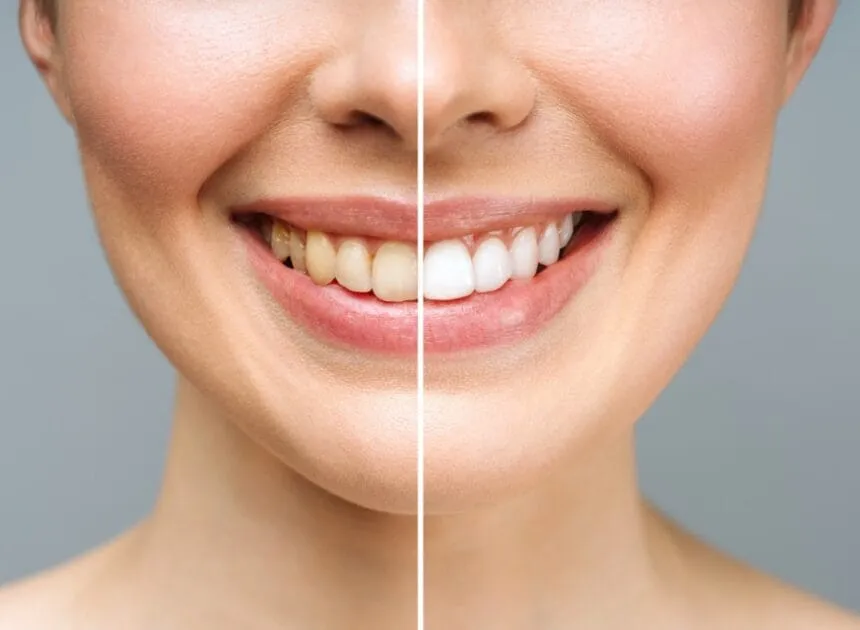
At-home kits are a reasonable starting point for mild yellow staining on structurally sound teeth. They are the wrong choice when the stain is deep, uneven, or tetracycline-related; when veneers or crowns need to be color-matched; or when sensitivity has already been an issue. In those cases, in-office Zoom teeth whitening in Huntington Beach delivers up to eight shades of change in a single 60-minute visit under monitored, gum-protected conditions.
Not sure which category you fall into? A short consultation is the fastest way to find out. You can schedule a whitening evaluation with our Huntington Beach practice and get a straight answer before you spend money on the wrong kit. For a broader look at your options, our cosmetic dentistry patient education hub covers everything from whitening candidacy to full smile makeovers.
Frequently Asked Questions
Are at-home whitening teeth kits safe for daily use? Most reputable kits are safe for a 7 to 14 day cycle but should not be used indefinitely. Overuse dehydrates enamel and worsens sensitivity.
Can whitening strips damage your enamel? Not at FDA-recognized concentrations, provided the strips are used as directed and the teeth are structurally healthy. Misuse and pre-existing erosion are the real risks.
Are LED whitening kits safe or just a gimmick? The LED is safe and low-heat. It adds a modest boost, but most of the whitening comes from the gel — not the light.
Who should not use at-home whitening kits? Pregnant patients, teens under 16, and anyone with untreated cavities, cracked teeth, or restorations on visible teeth should see a dentist first.
How do I know if a whitening kit is safe? Look for a disclosed peroxide concentration, ADA acceptance or credible clinical testing, and a legitimate U.S. retailer.
Talk to a Huntington Beach Dentist Before You Whiten
Whitening should brighten your smile — not create new problems. Dr. Richard Baldwin has helped Huntington Beach families make confident, safe whitening decisions for more than four decades. If you are weighing an at-home kit or considering a professional treatment, a brief evaluation will tell you exactly what your enamel can handle.
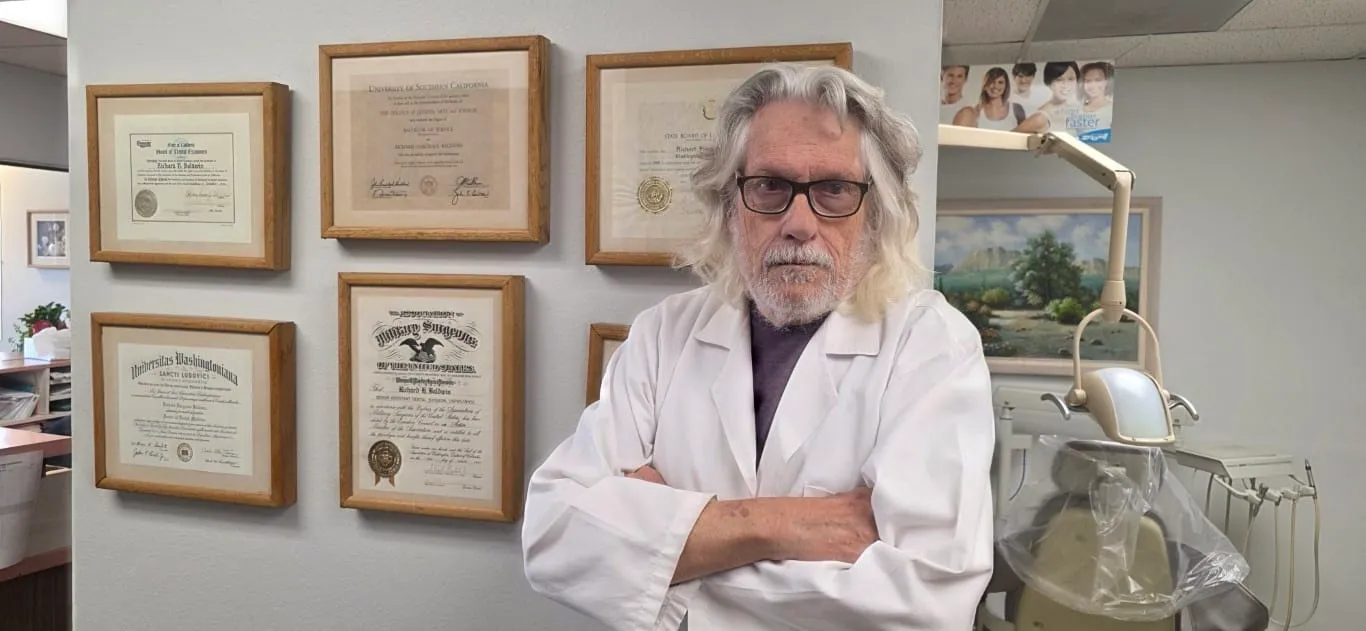
Written and clinically reviewed by Dr. Richard Baldwin, DMD General & cosmetic dentist in Huntington Beach since 1979 · Washington University School of Dental Medicine · Updated
Sources & further reading
- Whitening: what patients should know — American Dental Association
- Sensitive teeth — American Dental Association · MouthHealthy
This guide is general dental information from a practicing dentist, not a diagnosis. Treatment recommendations and costs are confirmed at an in-person exam.